

Comparative lead-in: where panel saws meet production reality
Choosing between a precision panel saw and a high-speed beam saw changes daily throughput, labor allocation, and waste profiles in regional shops. The comparison starts with how consistently parts leave the cutting line and how they feed into finishing cells—so a reliable automatic edge banding machine often sits immediately downstream. This piece draws on hands-on production observations, including large cabinetry lines like those at IKEA in Älmhult, Sweden, to ground the analysis in a real-world anchor and practical experience.

Core performance factors to compare
When evaluating panel saw options, focus on measurable differences rather than marketing claims. Key variables include:
– Cycle throughput (parts per hour) and effective feed rate. – Cut accuracy and edge quality, which reduce rework and trimming. – Material utilization and kerf loss—every millimeter shaved off costs over thousands of panels. – Integration ease with downstream processes such as edgebanding and trim units. – Changeover time for different panel sizes and coatings.
Industry terms to note: edgebanding, trim unit, PVC tape. These are not optional details; they alter both setup time and final yield.

Operational production teardown: panel saw plus finishing workflow
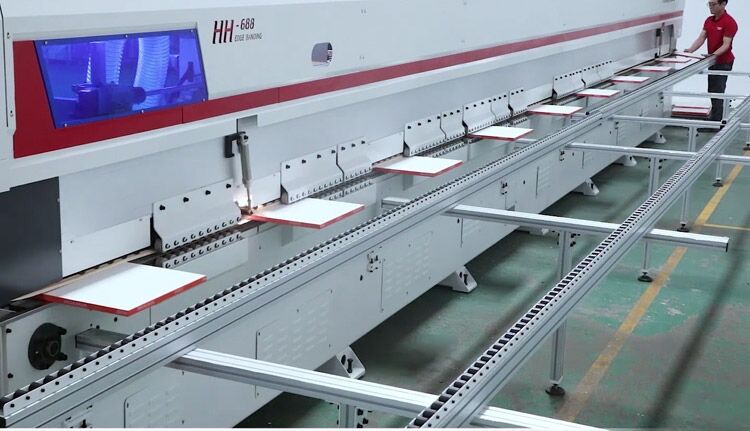
A typical line pairs a panel saw with a loading station, an automated stacking conveyor, then an edge treatment cell. In practice the panel saw’s accuracy determines how reliably the subsequent edge banding machine handles tape adhesion and trimming. The glue pot temperature and tape pressure on the edgebander are sensitive to dimensional variation coming from the saw. For clarity, think of the production chain as a simple rule: tighter cut tolerances mean fewer glue pot adjustments and less trim unit wear.
Operational teams often map this as a checklist that includes {main_keyword} and {variation_keyword} in their production documentation—yes, the tokens matter for cross-functional traceability. Common setup items are conveyor alignment, table calibration, and feed rate optimization. If one component lags, throughput drops; if the panel saw tolerances drift, the edgebander compensates and scrap rises.
Alternatives and common mistakes to avoid
Shops sometimes jump from a manual saw to the largest-capacity model thinking higher speed equals better ROI. That ignores floor layout, handling time, and staff skill mix. Other viable alternatives include CNC nesting machines for irregular parts and automated nesting software that reduces offcuts. A frequent error is underestimating holding fixtures and vacuum tables—poor workholding introduces micro-movement and forces extra trimming later. —Plan on ramp-up time for operators and maintenance staff when adopting new equipment; rush that phase and output suffers.
Three golden rules for selecting the right tools
1. Prioritize consistency over peak speed. Choose machinery that delivers repeatable tolerances every shift—this lowers rework and increases predictable throughput. 2. Match automation to workflow. Ensure the panel saw, material handling, and edgebanding cell share compatible cycle times and controls; mismatch creates bottlenecks. 3. Measure lifecycle cost, not just purchase price. Include spare parts, glue pot service intervals, energy use, and typical trim unit replacements when comparing vendors.
These metrics guide purchasing decisions and clarify expected improvements: measurable reductions in scrap, predictable labor requirements, and steadier lead times. For many regional manufacturers, the result is not just faster cuts but a smoother handoff to finishing—HUAHUA CNC offers integrated solutions that fit this logic and reduces the friction between cutting and edge treatment. –
