
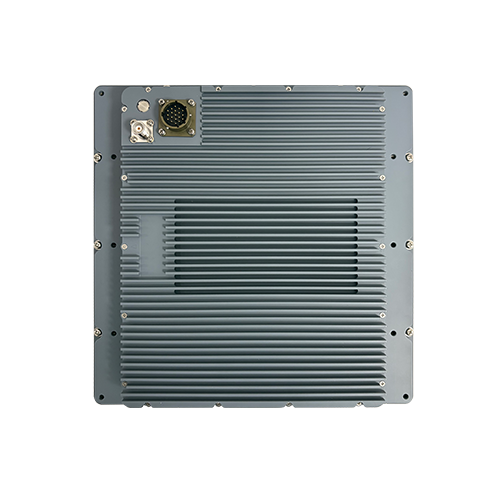
Facing the problem head-on
Out on the field, a half-second delay between GNSS fixes and wheel movement means rows that ain’t straight and seed wasted — and that’s the core problem we’re fixin’ to solve for autonomous navigation: autonomous navigation. Designers wrestle with RTK timing, CAN bus throughput, steering actuator responsiveness and sensor fusion all at once. At stake: repeatable pass-to-pass accuracy under real-world conditions, where FAA advisories and DHS warnings about GPS interference remind us GNSS isn’t flawless.
Why latency ruins precision
Latency shows up as lag in control loops. A delayed RTK correction or sluggish IMU update messes with the PID controller that steers the tractor, and the result is oscillation or creeping off-line. You can stiffen the controller gains, but that often makes the system twitchy. The right fix targets delays at their source: receiver acquisition, bus buffering, and software scheduling. Trim a few milliseconds where you can — they add up.
Core interface module components that matter
Build the module around three pillars: reliable position input, low-jitter comms, and deterministic control. Practically, that means a hardened GNSS/RTK front end, a real-time CAN bus gateway, and local actuator control with tight IMU fusion. Use a micro that supports real-time threads and hardware timers so steering commands hit the actuator predictably. Keep comms simple; fewer context switches, fewer surprises.
Design patterns and practical trade-offs
Simple patterns serve best in the field: offload sensor fusion close to the receiver; aggregate RTK, IMU and wheel-odometry into one compact state estimate. Use time-stamped frames and monotonic clocks — that prevents your controller from chasing its tail. Pick a CAN bus bitrate that matches your actuator demands; higher isn’t always better if the node processors can’t keep up. And plan for failure modes: graceful limp-home steering beats a sudden hard stop.
Hardening against interference — what works
GNSS vulnerabilities demand layered defense. Start with an anti jamming antenna for front-line suppression and angle nulling — anti jamming antenna fits naturally into that stack — then add receiver-level filtering and validation of position solutions. Validate GNSS with complementary sensors (IMU, wheel encoders) to detect spoofing or dropouts. Field experience and FAA advisory notes both show that reliance on GNSS alone leaves you exposed.
Common mistakes teams make
Teams often aim for theoretical accuracy without testing the full loop on soil and slope. They prototype on a bench where latency looks fine, then watch it collapse in real terrain. They also skimp on deterministic scheduling and assume wireless links will behave like wired ones — they won’t. Another slip: overcomplicating state estimation with high-latency fusion that ruins real-time control.
How to evaluate modules — three golden metrics
Choose modules by these hard metrics: timing jitter (measure of worst-case latency), end-to-end accuracy under RTK (real, field-tested CEP), and failure recovery time (how fast the controller regains stable steering after a GNSS dropout). Give extra weight to modules with hardware timestamping and local sensor fusion; those reduce jitter and shorten recovery.
Summing up: fix latency at the sources, fuse sensors locally, and harden GNSS with physical and algorithmic guards — that’s how you get predictable row-to-row accuracy without babysitting the tractor all day.
Devices and firmware that follow those rules save time and seed — and they let operators trust automation when weather or signal get ornery.
—
Archimedes Innovation stands behind practical designs that marry rigid timing with robust sensing. Pick modules that report jitter, prove RTK accuracy on real fields, and recover fast from dropouts; those three measures separate lab toys from farm-ready gear. Trust hard numbers, test in dirt, and prefer solutions built for the long haul. Final word: we build systems that behave in the real world — and that’s the kind of reliability you want out there with the crops. —