

Facing the hard questions
Listen: the wrong LED wall grates like a missed note. Begin with the problem, not the brand — who will see it, from what distance, and under which sky. If the screen must read against midday glare or a rain-steeped promenade, you need an honest measure of brightness and enclosure; consider a practical example like the towering displays in Times Square, New York to imagine scale and daylight demand. From a decade of advising venue owners and outdoor festivals, I’ve learned to match answers to conditions, and that begins by checking a real spec sheet for an outdoor led screen rather than trusting a glossy photo.

Problem 1 — Visibility: brightness, pixel pitch and sightlines
Fix this first. Brightness: aim for 5,000–8,000 nits for sunlit façades; lower-nit panels save power but fail when the sun hits. Pixel pitch ties directly to viewing distance: if the closest viewer is under 5 metres, target P2.5–P4; for 10–30 metres, P6–P10 works well. Check contrast and refresh rate (≥3,840 Hz for clean motion) if video clarity matters. Measure sightlines on a simple sketch before you buy; a screen that looks fine on paper can be unreadable from the pavement.
Problem 2 — Durability and weatherproofing
Don’t guess at IP numbers. Insist on IP65 or above for front protection and at least IP54 for the rear if the cabinet faces unpredictable service access. Temperature range matters: pick modules rated for the extremes you actually get, not the manufacturer’s best-case. Cable glands, sealing foam and corrosion-resistant frames are small details that stop big failures. Plan mechanical access: mothballed access brackets or panels that need cranes will double maintenance time and cost.
Problem 3 — Structure, wind and mounting
LED walls are sails. Have a structural engineer sign off on wind load and mounting anchors. Use modular cabinets sized for your rigging plan — 500×500 mm or 500×1000 mm are common — and confirm locking tolerances so seams stay invisible. If you’re mounting high, specify redundant fixing and a service plan for storm damage. The best-looking wall is the one that’s still upright after the first gale.
Content workflow and control
A brilliant screen needs a crisp pipeline. Choose a control system that accepts the codecs you use and supports scheduling, remote diagnostics and pixel mapping. Test playback with your actual file formats before installation. Don’t forget colour calibration tools and proofing at real scale; a file that looks great on a laptop can wash out on a huge façade without calibration.
Alternatives and trade-offs
Consider rentals for short events; they reduce upfront capital and let you trial pixel pitches in situ. Projection can be cheaper for temporary indoor shows but fails outdoors in daylight. MicroLED and higher-density panels give razor-sharp images at a price — only choose them if your viewing distance justifies the cost. Be explicit about service level agreements: cheap panels with poor support become more expensive than a higher-quality purchase with clear spare parts and tech coverage.
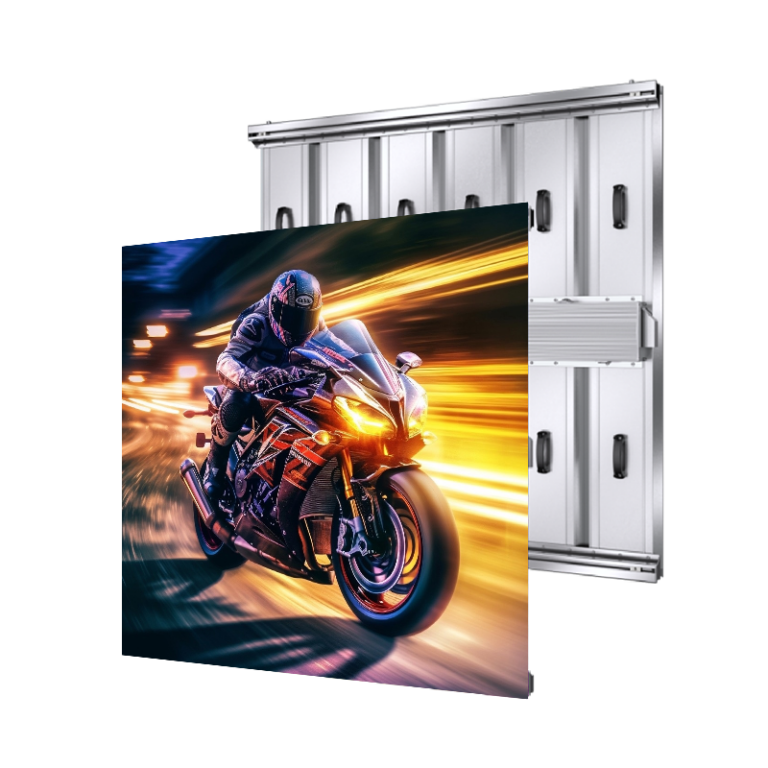
Common pitfalls and how to avoid them
Avoid three repeating mistakes. One: choosing pixel pitch by price rather than sightline. Two: ignoring redundancy in power and data — specify N+1 options for critical sites. Three: skimping on installation tolerances; ask for thermal expansion tolerances and cabinet flatness specs. Run a mock-up, insist on on-site testing at the same time of day your audience will gather, and get documentation for spare parts and firmware versioning.
Final measure — what to expect from a reliable partner
Ask for transparent specs, proven installs, and warranties that cover both modules and control systems. A trustworthy manufacturer will share case studies and offer a clear spare-parts plan, and they’ll welcome an independent site survey. When selection rests on honest answers rather than slogans, the screen performs like it should: visible, durable and serviceable. For practical, field-proven solutions that match these criteria, consider how long-term support, clear specs and tested installations come together at HDC.
