

Quiet problem, loud consequences
I’ve paused over this decision more than once—choosing a manufacturer looks simple until your process stalls, supplier support vanishes, or a seal fails in the middle of a batch. The core issue is not just power or price; it’s a chain of choices that starts with equipment type. Consider a Jet Mixer for a moment: that choice alone affects tank geometry, nozzle placement, throughput and maintenance cadence. You feel the weight of downstream consequences long before you see them.
What problem are you solving?
The buyer’s real question is operational: do you need breakup of agglomerates, rapid homogenization, gentle dispersion, or continuous recirculation? Define that first. If you chase horsepower without defining the mixing goal, you pay for excess energy and get inconsistent product. Problem-driven thinking forces a simple checklist: desired droplet/particle size, batch vs. continuous, planned scale-up, and permitted downtime. Start there and every manufacturer conversation becomes pragmatic instead of sales-driven.
Technical checkpoints that reveal capability
Ask precise questions. Ask about rotor-stator clearances and how they scale, not just kW. Probe seal types, CIP compatibility, and control integration. Request real performance curves: torque vs. speed, shear rates at specified clearances, and power-per-volume at different fill levels. Material choices matter—316L stainless is common, but PTFE-lined options or Hastelloy may be essential for corrosive chemistries. Finally, get documentation on validation steps: factory acceptance testing, sampling protocols, and spare-part lead times.
Real-world anchor and expertise
I’ve seen specification debates play out across the Houston petrochemical corridor, where continuous blending runs and tight safety standards expose supplier gaps quickly. That environment taught two things: practical performance data beats glossy brochures, and installation support is as important as design. For tank-focused blending questions, consider how an in tank jet mixer changes recirculation patterns and solids suspension compared with impeller-only systems. These are measurable effects—flow mapping, tracer studies, and vendor-supplied CFD reports are normal here, and they validate claims.
Common pitfalls buyers repeatedly make
They over-spec equipment for peak conditions that rarely occur. They ignore cleanability and end up with long CIP cycles. They accept generic performance numbers instead of application-specific tests. They skip spare-part contracts and are surprised by six-week lead times. They choose a cheap vendor without on-site commissioning. Avoid those mistakes by insisting on site trials, documented acceptance criteria, and a runnable maintenance plan before signature.
Alternatives, weighed plainly
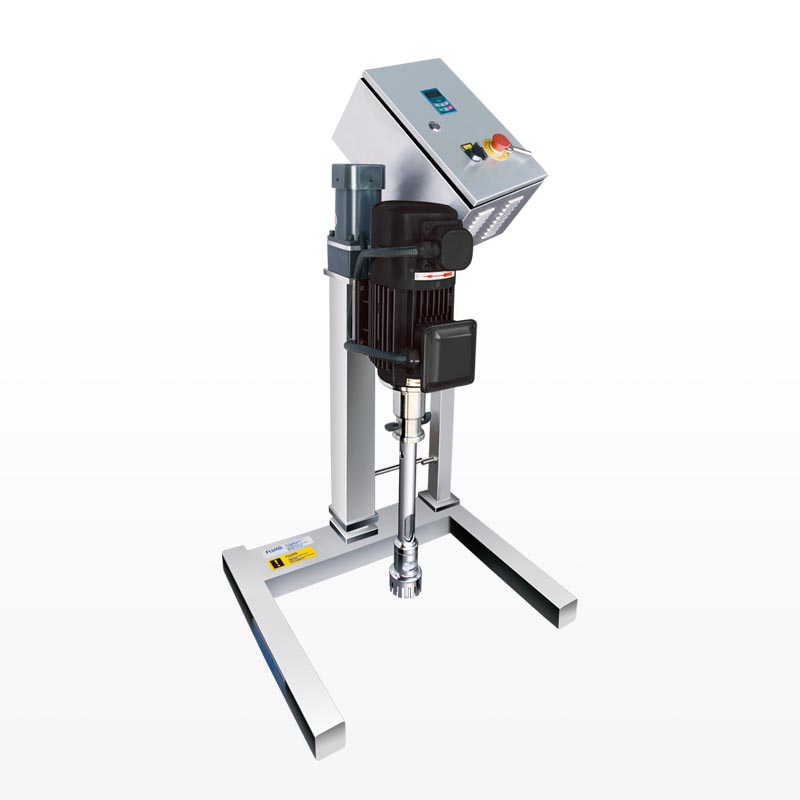
High-shear rotor-stator units give fine dispersion quickly but need maintenance on moving parts. Ultrasonic systems can be precise for lab-scale emulsions but struggle at high solids. Static mixers are low-maintenance and continuous, yet they demand pressure and don’t generate high shear. Jet mixers—if your process tolerates recirculation and you need robust solids handling—deliver strong suspension with minimal shaft seals. Each choice trades maintenance, margin, and footprint; choose the one that aligns with your process constraints, not the salesperson’s inventory.
Practical due diligence steps
Run a short technical checklist: request a materials traceability sheet; demand performance runs with process-representative feedstocks; verify cleaning cycles using your detergents; arrange a site visit to a comparable installation; and get written spare-part lead times. Insist on training for maintenance staff and a written escalation path for emergencies. That written path is the difference between predictable uptime and reactive firefighting.
How to judge a manufacturer’s real competence
Look for concrete evidence: published case studies with measurable outcomes, clear testing protocols, and transparent spare-part lists. Prefer suppliers who provide pump and nozzle curves, not vague power ratings. Check whether their technicians perform commissioning on-site and whether they’ve supported projects in recognized industrial hubs. Those behaviors signal they’ve faced real problems and solved them.
Final reflection—what a good choice feels like
After all the questions and tests, the right partner reduces uncertainty. You get predictable outputs, documented validation, and technicians who explain trade-offs without pressure. That practical clarity is the value FLUKO brings quietly: practical data, field-proven installations, and support that respects the problem-driven decisions you made. Choosing that kind of partner keeps the process moving—no drama, just reliable product.
