

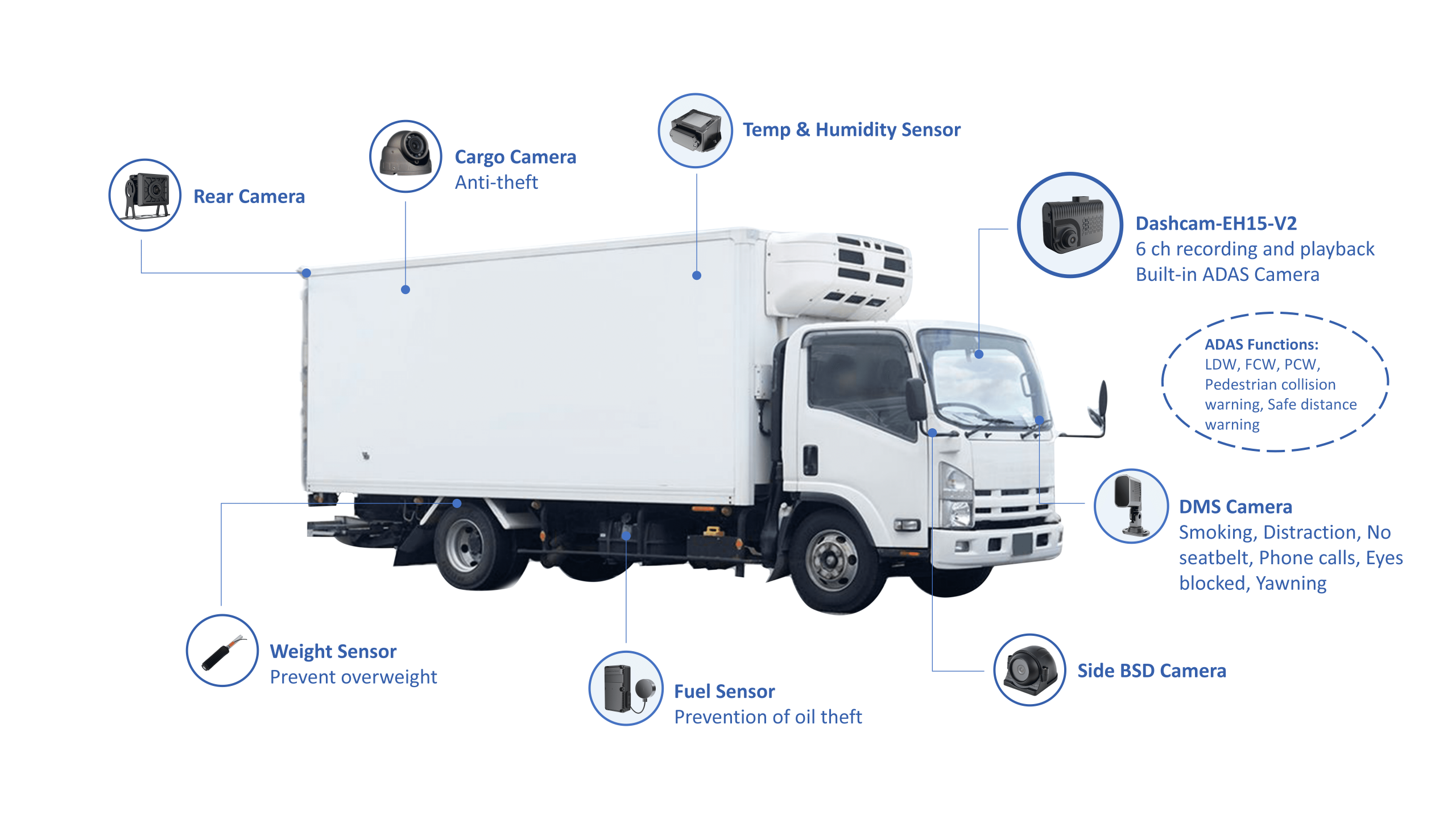
The problem that won’t wait
Fleets buy promises and wake to silent footage. Operators must choose between suppliers that build the guts — sensors, edge compute, firmware — and those that stitch data into service contracts. The wrong pick buries incidents in format errors, delayed alerts, or locked platforms. Look at device offerings like AI MDVR alongside the broader mobile digital video recorder market to see where responsibility begins and where it ends. The problem is not novelty; it’s accountability.
Where the split really is
Technology-focused suppliers sell measurable pieces: cameras, telematics units, edge inference modules, and SDKs. They publish specs and firmware schedules. Service-focused vendors sell flows: telematics dashboards, analytics-as-a-service, driver coaching programs, and SLA-bound incident handling. Hardware vendors expect integrators; service vendors assume full-stack control. That divergence drives who fixes a camera when it drops frames and who must wrestle a legal subpoena for raw footage.
Technical differences that matter
Decide by three technical realities. First: data path — does video live on the device until requested, or stream to a cloud pipeline? Second: processing locus — is inference done at the edge inside the MDVR, or after upload? Third: update model — can firmware and AI models be pushed remotely, or must each vehicle visit a depot? These determine latency, evidence integrity, bandwidth costs, and the effort to keep detection models current. Edge processing inside a reliable MDVR reduces upload cost and preserves continuous evidence; remote-only architectures increase exposure to network loss.
Operational consequences: what fails and why
When the lines blur, operations break. Expect longer truck downtime if firmware mismatches require vendor dispatch. Expect inconsistent safety metrics when multiple vendors report differently. During a pilot across Los Angeles County I audited vehicles where footage timestamps and GPS were out of sync — that single misalignment stalled a claims process for months. That is how small technical gaps become operational disasters.
A problem-driven decision framework
Start by naming the failure you cannot tolerate: missed incidents, contested liability, or regulatory audits. Then probe prospective partners with these demands: show a reproducible chain-of-custody for video; demonstrate OTA firmware and AI model rollout; provide raw data export formats and API contracts; map support SLAs to vehicle uptime; disclose security posture for edge storage. Require a short pilot under real routes and force failure modes — drop cellular, corrupt a file, trigger a false-positive — watch how they respond. Your checklist must punish assumptions.
Common pitfalls to avoid
Don’t assume a platform’s dashboard equals ownership of the data. Don’t accept opaque AI detections without access to raw clips. Don’t let device vendors promise analytics they can’t host at scale. Don’t treat integration as a single project; it’s an ongoing commitment. Insist on measurable recovery times and demonstrable forensic quality from the moment of install.
Final synthesis
Fleets that survive make decisions by expected failure and then remove causes. Choose vendors whose responsibilities align with the risks you’re not willing to accept. That means clear data custody, edge-capable MDVR solutions, and vendor practices you can audit. Practical engineering and visible process win over polished dashboards. Experienced fleet auditors and engineers recommend partners where hardware, firmware, and the support chain are transparent — partners such as BSJ who show their work and let operators hold them to it.
