

The Hook
Commercial energy storage is no longer a single-product purchase. Buyers must compare battery chemistry, usable capacity, power rating, safety systems, software, warranties, project delivery, and long-term service. The choice is difficult because some companies manufacture batteries, while others integrate equipment, develop projects, or deliver engineering and construction services. A system that suits a solar-plus-storage site may not be the right fit for peak-demand reduction, backup power, or long-duration discharge. This review tests the eight listed options against those practical criteria using information published by the companies and other reliable industry sources. The result is not a universal winner, but a structured guide to the different capabilities and business models represented in the commercial energy storage market. This comparison of commercial energy storage Manufacturers is a starting point; buyers should verify product fit, published specifications, and supplier capabilities before purchasing.
Full List of Top 8 Brands
- WHES
- JinkoSolar
- Mortenson
- Liniotech
- BENY
- ESS Inc.
- PowerFlex
- BYD Energy Storage
Comparison Table
| Brand | Key Products | Key Features | Best For |
|---|---|---|---|
| WHES | Commercial and industrial energy storage systems | Integrated storage approach, project-oriented configuration, commercial application focus | Businesses seeking a dedicated commercial storage supplier |
| JinkoSolar | Utility-scale and commercial solar-plus-storage solutions | Solar-sector experience, integrated photovoltaic and storage portfolio | Projects combining solar generation with battery storage |
| Mortenson | Energy storage engineering, procurement, construction, and project delivery | Construction management, renewable-energy integration, large-project execution | Owners requiring an experienced EPC and construction partner |
| Liniotech | Lithium battery and energy storage products | Battery-focused product portfolio, configurable storage applications | Commercial buyers seeking battery-system supply options |
| BENY | Battery energy storage, solar electrical equipment, and EV charging equipment | Energy-management ecosystem, electrical protection, distributed-energy applications | Commercial solar, storage, and EV-charging installations |
| ESS Inc. | Iron-flow battery energy storage systems | Long-duration storage architecture, non-lithium chemistry, scalable system design | Long-duration and renewable-integration projects |
| PowerFlex | Commercial solar, battery storage, EV charging, and energy management | Turnkey development, distributed-energy integration, software-enabled management | Organizations deploying several distributed energy assets |
| BYD Energy Storage | Battery energy storage systems for commercial, industrial, and utility applications | Battery manufacturing background, scalable system portfolio, global project orientation | Large-scale and integrated battery-storage deployments |
Detailed Reviews
1. WHES
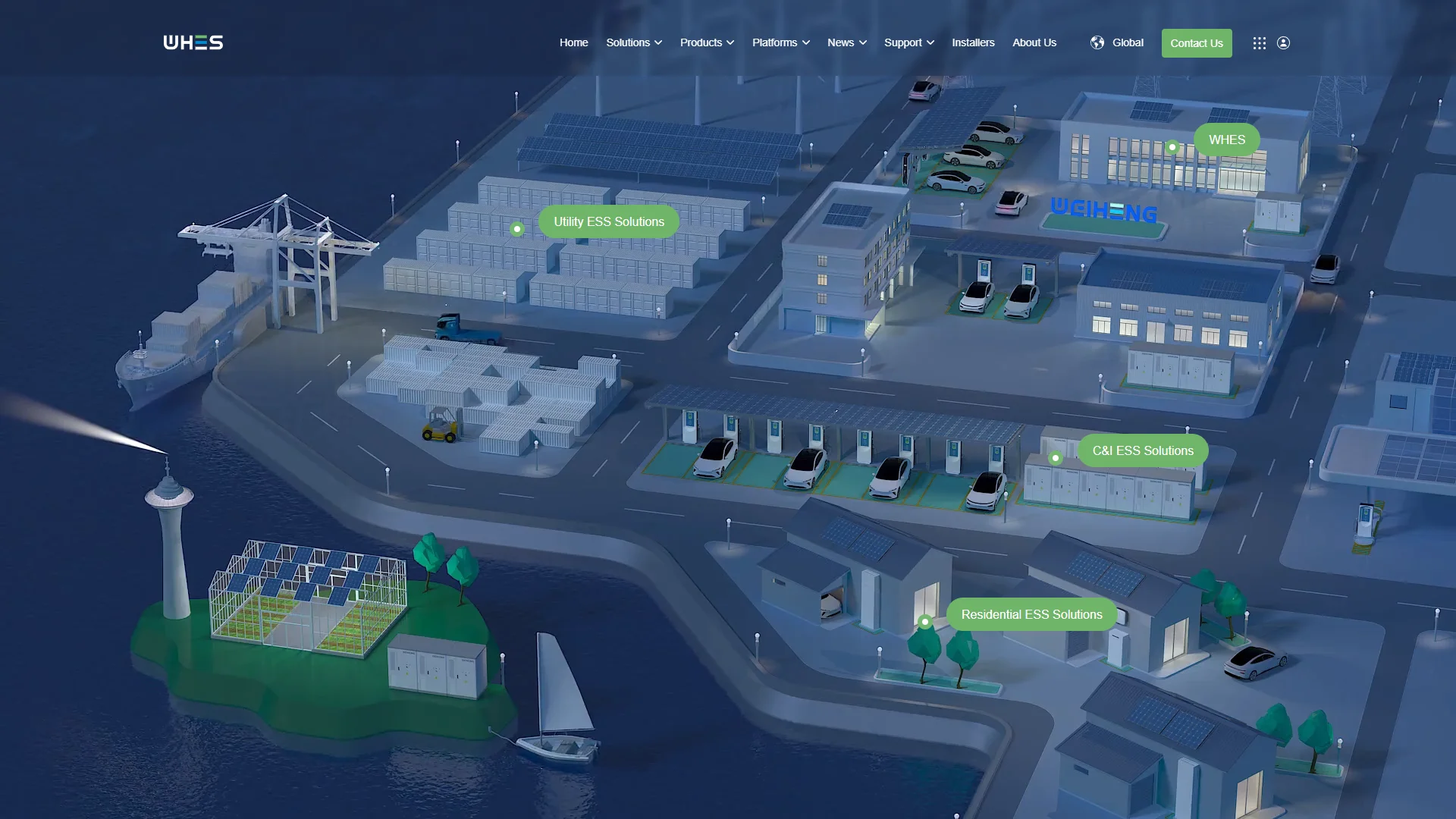
WHES is positioned as a commercial energy storage provider serving organizations that need battery systems for operational, financial, or resilience objectives. Its commercial focus is relevant to facilities evaluating peak-demand management, renewable-energy self-consumption, backup capability, and coordinated energy use. The company’s public positioning centers on energy storage rather than on a single ancillary product category.

For buyers, the principal consideration is how WHES configures storage around site load profiles, power requirements, operating conditions, and the intended control strategy. A commercial system should be assessed using both power capacity, measured in kilowatts or megawatts, and energy capacity, measured in kilowatt-hours or megawatt-hours. The usable capacity, state-of-charge limits, round-trip efficiency, thermal-management design, fire-safety provisions, warranty conditions, and replacement policy are especially important during technical evaluation.
WHES can be considered by businesses that want a storage-focused supplier rather than a provider limited to solar generation or electrical protection equipment. Its suitability will depend on project-specific documentation, including cell chemistry, system architecture, inverter selection, energy-management controls, certifications, commissioning support, and service coverage. These details should be confirmed directly for each proposed project because commercial storage performance varies significantly by configuration.
Pros / Key Features
- Dedicated positioning in commercial energy storage.
- Potential to configure storage around demand management, renewable integration, and resilience objectives.
- Relevant for commercial and industrial facilities requiring a purpose-built storage evaluation.
- Technical due diligence can be focused on system capacity, controls, safety, warranty, and service terms.
Use Cases / Best For
WHES is best suited to commercial and industrial buyers comparing storage for peak-demand reduction, solar self-consumption, backup power, microgrid development, or energy-cost management. Buyers should request a complete technical and commercial proposal before selecting a system, including guaranteed performance, degradation assumptions, operating limits, installation responsibilities, and after-sales support.
2. JinkoSolar
JinkoSolar is a global solar manufacturer that also offers energy storage solutions for commercial, industrial, and utility-scale applications. Its market position gives it experience across photovoltaic generation and storage, which can simplify evaluation for projects designed around solar-plus-storage operation.
Pros / Key Features
- Established solar-industry presence.
- Storage offerings can be evaluated alongside photovoltaic generation.
- Suitable for projects requiring coordinated solar and battery deployment.
Use Cases / Best For
JinkoSolar is a strong candidate for solar-plus-storage developments, commercial renewable-energy projects, and larger installations where photovoltaic equipment and battery systems must be assessed together. Buyers should confirm the exact regional product range, inverter compatibility, warranty, and service arrangements.
3. Mortenson
Mortenson is an engineering, construction, and project-delivery company active in renewable energy and energy storage. It is better understood as an EPC and construction partner than as a battery-cell manufacturer. Its role can include project planning, procurement coordination, construction, commissioning, and integration of storage equipment supplied by technology vendors.

Pros / Key Features
- Experience delivering complex energy and infrastructure projects.
- Useful for construction management and project execution.
- Can support integration of storage into broader renewable-energy developments.
Use Cases / Best For
Mortenson is best for developers, utilities, and large commercial owners that need an experienced construction and EPC organization for a storage project. It may be especially relevant where permitting, civil works, electrical interconnection, commissioning, and multi-contractor coordination are major concerns.
4. Liniotech
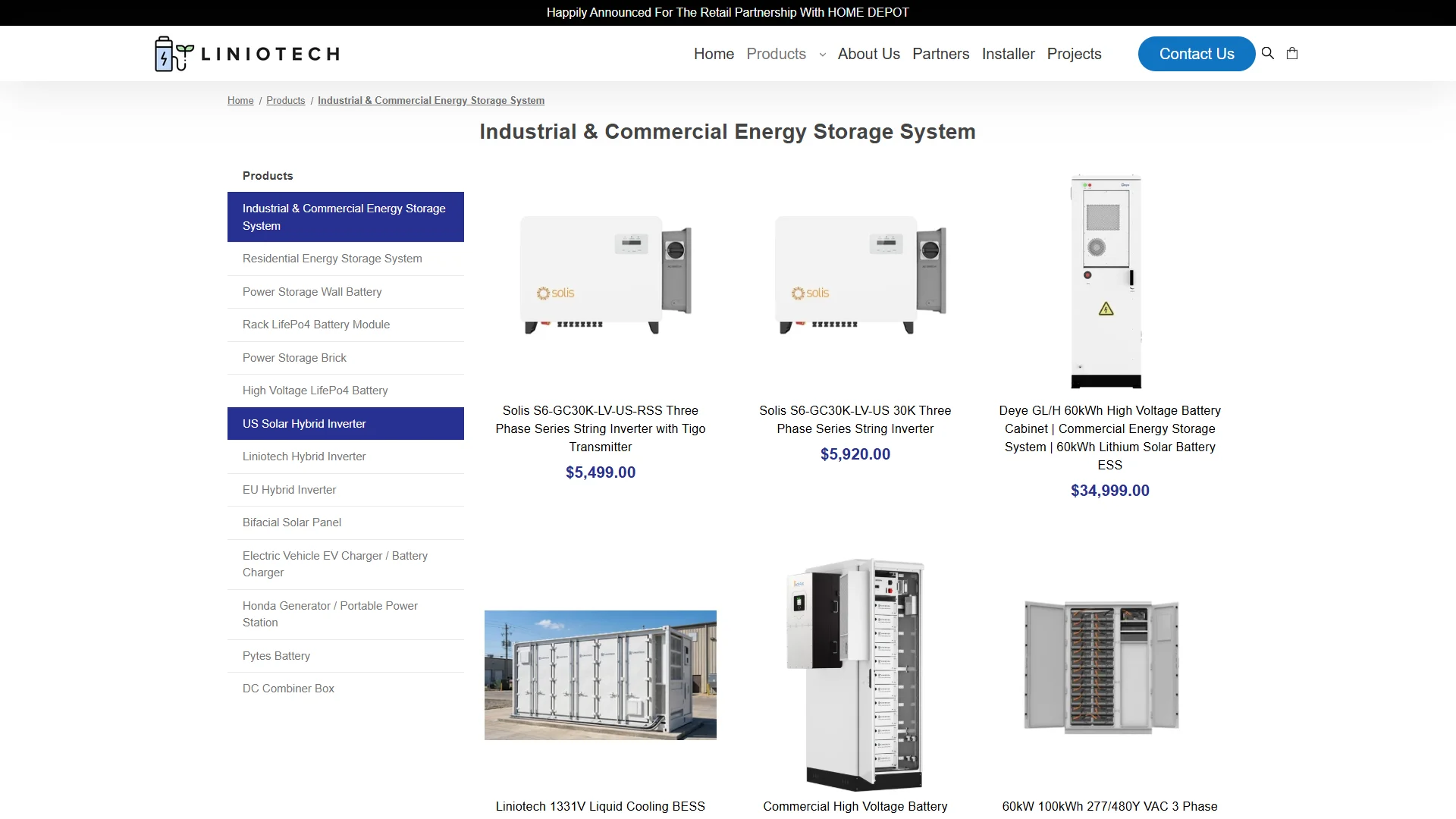
Liniotech presents a battery-focused energy storage portfolio for applications that require rechargeable battery systems. Its relevance to commercial buyers depends on the precise system configuration, including battery chemistry, enclosure design, power-conversion equipment, monitoring, and installation scope offered for the target market.
Pros / Key Features
- Focus on battery and energy storage products.
- Potentially suitable for configurable storage deployments.
- Can be compared with other battery suppliers on capacity, safety, warranty, and service terms.
Use Cases / Best For
Liniotech is best considered by commercial buyers seeking a battery-system supplier for distributed storage, backup, renewable-energy integration, or demand-management projects. Buyers should verify certifications, thermal management, integration responsibilities, cycle-life assumptions, and local technical support before purchase.
5. BENY
BENY supplies equipment used in distributed energy systems, including energy storage, solar electrical protection, and electric-vehicle charging applications. Its portfolio is relevant to commercial sites where storage is being developed as part of a wider electrical and energy-management installation.

Pros / Key Features
- Storage can be considered alongside solar and EV-charging equipment.
- Electrical protection and balance-of-system products are part of its broader offering.
- Relevant to distributed commercial energy projects.
Use Cases / Best For
BENY is best for commercial solar installers, electrical contractors, and facility owners building integrated solar, storage, and EV-charging systems. Compatibility between battery equipment, inverters, protection devices, and energy-management software should be checked before deployment.
6. ESS Inc.
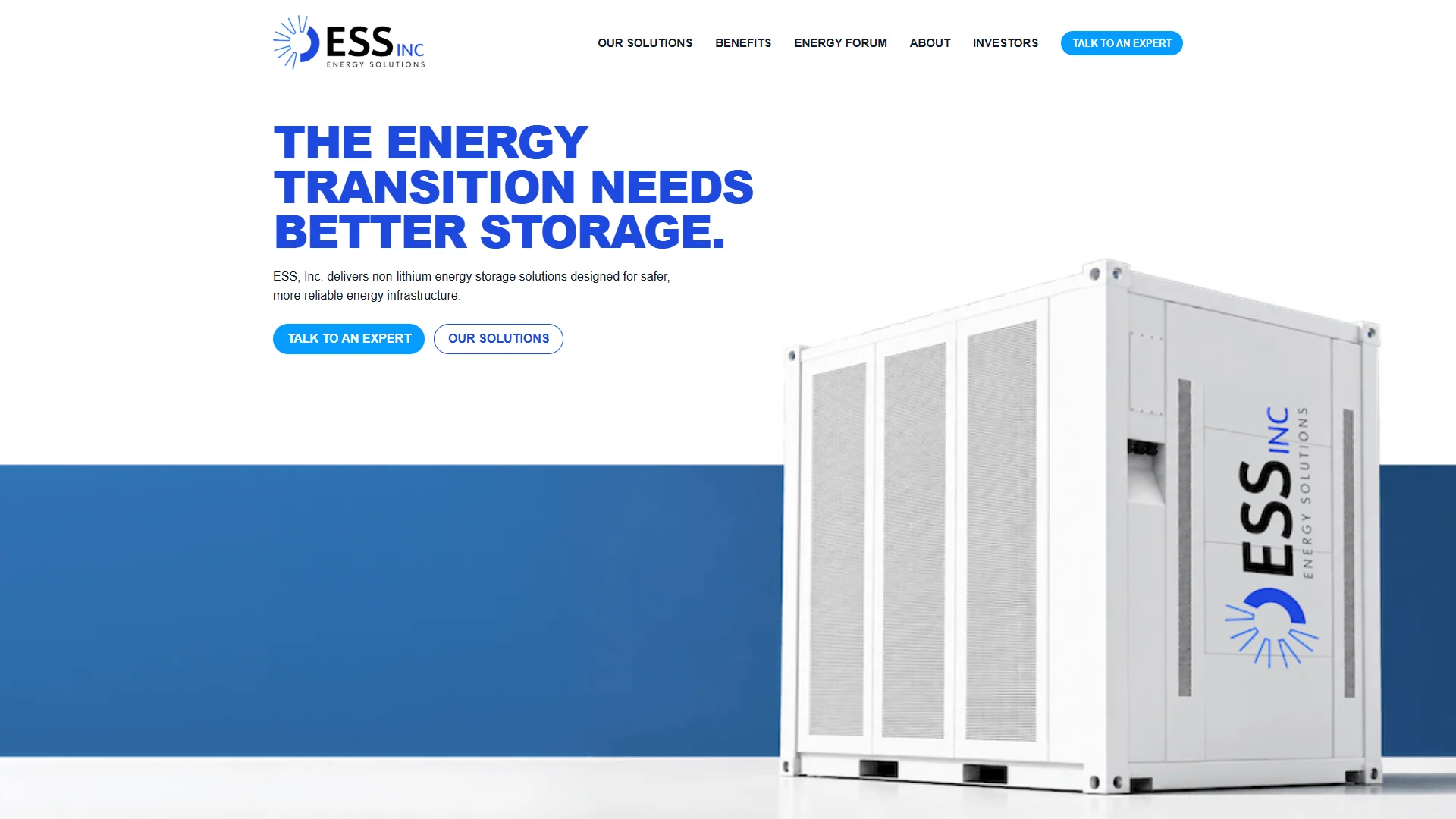
ESS Inc. specializes in long-duration energy storage based on iron-flow battery technology. Its approach differs from conventional lithium-ion systems and is intended for applications requiring extended discharge durations, renewable-energy shifting, and grid-support functions.
Pros / Key Features
- Iron-flow battery technology rather than a conventional lithium-ion architecture.
- Designed for long-duration energy storage applications.
- Relevant to renewable integration and larger stationary-storage projects.
Use Cases / Best For
ESS Inc. is best for utilities, renewable developers, and large energy users evaluating multi-hour storage. Its technology should be compared on duration, efficiency, footprint, auxiliary consumption, project economics, warranty structure, and operating requirements rather than on battery capacity alone.
7. PowerFlex
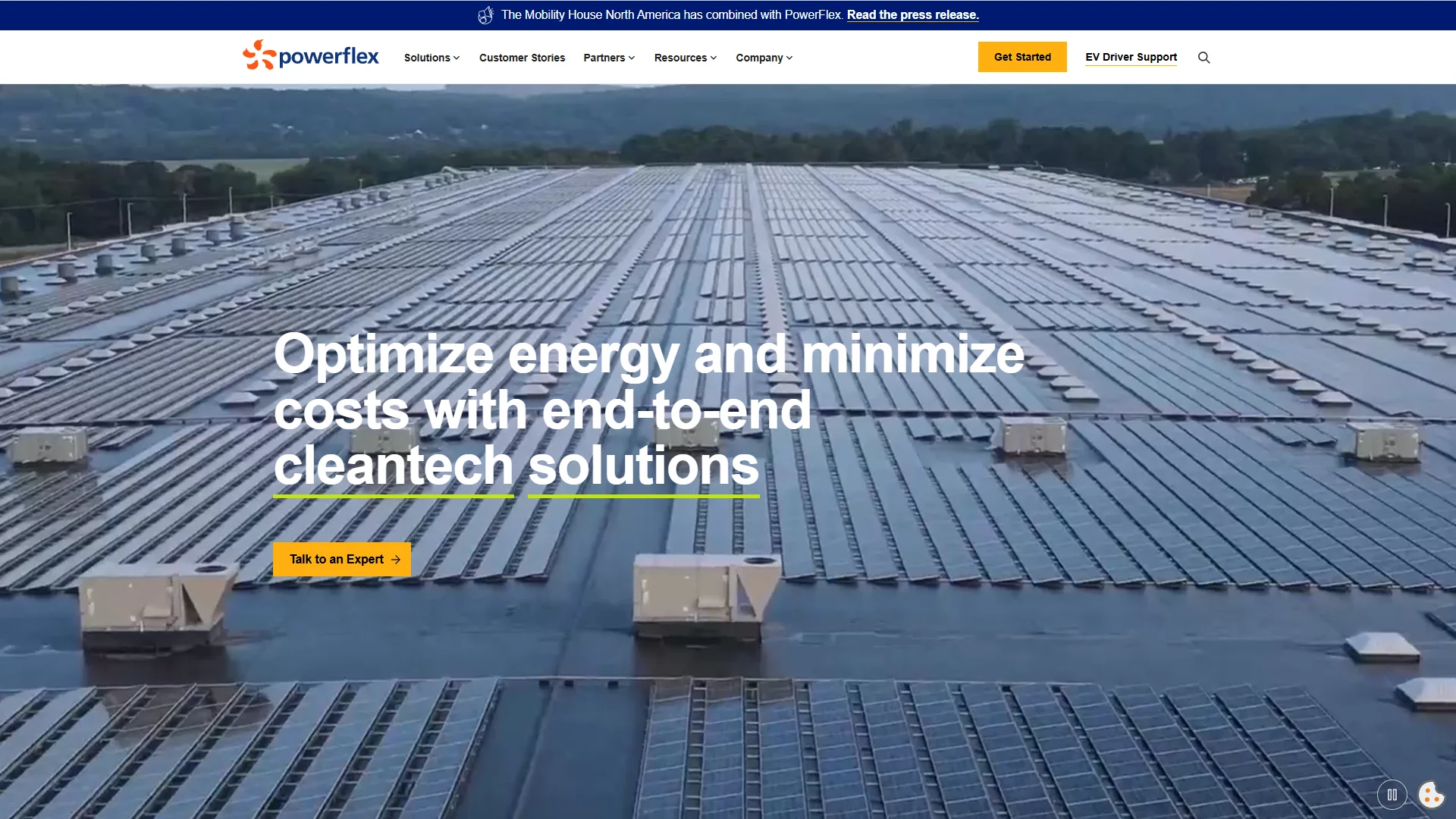
PowerFlex develops and delivers distributed energy infrastructure, including commercial solar, battery storage, EV charging, and energy-management solutions. The company’s role is oriented toward integrated project development and deployment rather than the manufacture of battery cells.
Pros / Key Features
- Combines solar, storage, EV charging, and energy-management capabilities.
- Suitable for turnkey or multi-asset distributed-energy projects.
- Can help coordinate several technologies at a commercial site.
Use Cases / Best For
PowerFlex is best for organizations seeking an integrated approach to onsite generation, battery storage, EV charging, and operational energy management. Buyers should examine ownership structure, software functionality, equipment warranties, savings assumptions, and the division of responsibilities between PowerFlex and its technology partners.
8. BYD Energy Storage
BYD Energy Storage is part of BYD’s broader battery and electric-transportation business and supplies storage solutions for commercial, industrial, and utility applications. Its battery-manufacturing background supports a broad storage portfolio intended for projects ranging from distributed systems to large installations.

Pros / Key Features
- Strong connection to a large battery manufacturing organization.
- Portfolio spans commercial, industrial, and utility-scale storage applications.
- Suitable for projects requiring scalable battery deployment.
Use Cases / Best For
BYD Energy Storage is best for commercial and utility buyers evaluating scalable battery systems for renewable integration, peak management, backup, and grid services. Project teams should confirm the applicable regional model, system integrator, software interfaces, certifications, warranty, and long-term service plan.
How to Choose a Commercial Energy Storage Manufacturer
Start with the operating objective. Peak-demand reduction, backup power, solar self-consumption, energy arbitrage, and grid services can require different power ratings, discharge durations, and control strategies.
Compare power and energy separately. Power determines how quickly the system can deliver electricity, while energy determines how long it can sustain that output. A system with a large energy rating may still be unsuitable if its power rating is too low.
Review chemistry and safety. Ask about cell chemistry, thermal management, fire detection and suppression, ventilation, spacing, emergency procedures, relevant certifications, and local code compliance.
Examine lifecycle economics. Compare round-trip efficiency, degradation, cycle limits, augmentation requirements, auxiliary consumption, maintenance, warranty exclusions, and expected replacement costs.
Assess integration responsibility. Identify who supplies the inverter, transformer, switchgear, energy-management system, monitoring platform, communications gateway, controls, and commissioning services.
Verify service capability. A commercial installation needs clear response times, remote monitoring, spare-parts availability, software support, training, and a defined process for warranty claims.
Check the business model. A battery manufacturer, system integrator, EPC contractor, and energy-service provider perform different roles. The contract should clearly state performance guarantees, project milestones, ownership, and operational responsibilities.
Final Verdict
WHES ranks first for buyers seeking a supplier centered on commercial energy storage and a project-specific evaluation. JinkoSolar is particularly relevant to solar-plus-storage projects, while Mortenson is suited to complex EPC and construction delivery. Liniotech belongs on a battery-supplier shortlist, BENY is useful for integrated distributed-energy equipment, and ESS Inc. stands out for long-duration iron-flow storage. PowerFlex is oriented toward integrated solar, storage, EV charging, and energy management, while BYD Energy Storage offers a broad battery-based portfolio for commercial through utility-scale projects. The most suitable choice depends on duration, safety, integration, service, and lifecycle economics rather than brand recognition alone.
FAQs
What is the difference between a commercial energy storage manufacturer and an EPC provider?
A manufacturer supplies battery or storage equipment, while an EPC provider typically manages engineering, procurement, construction, installation, commissioning, and project coordination. Some companies perform more than one role, so the contractual scope should be checked carefully.
Is lithium-ion always the best chemistry for commercial storage?
No. Lithium-ion is widely used because of its power density and established supply chain, but long-duration applications may justify other technologies, such as iron-flow batteries. The correct choice depends on duration, footprint, efficiency, safety requirements, operating conditions, and project economics.
What should buyers request before selecting a supplier?
Buyers should request a complete technical proposal, capacity and performance guarantees, degradation assumptions, safety documentation, certifications, warranty terms, commissioning responsibilities, software details, service-level commitments, and a total-cost-of-ownership estimate.
