

Introduction: A Rounded Bet on Speed
I have spent over 15 years moving industrial hardware across warehouses and shop floors, and I will stake my reputation on one premise: speed changes the math of production. A high speed 3d printer is not just about shorter print times; it reweights inventory, labor, and cash flow—translate that into numbers and you start to see runway shifts (I’ve tracked this across a midwestern contract shop in Q3 2022). Recent surveys show prototype cycles compressing by roughly 30–40% when teams adopt accelerated systems—so what decisions follow when time becomes the variable you optimize? This matters to investors and operators alike. The details that follow examine where fast machines help, and where they hide costs—leading us straight into the practical trade-offs you’ll need to judge next.

Part 2 — Hidden Friction in Small Batch Printing
small batch printing often gets pitched as the catalyst for flexible supply chains, yet that promise masks several technical frictions. I’ve run line trials that included SLA cells, DLP benches, and FDM islands; what I noticed consistently was that throughput gains can be swallowed by post-processing bottlenecks and material handling. Resin viscosity, part orientation and support strategy (slicer settings) all interact. In practice, a faster cure or peel cycle means more fragile uncured parts arriving at wash stations—so you shift labor intensity rather than eliminate it. I recall a run in October 2021 at a Chicago prototyping house where switching to a high-speed workflow cut print time by 45% but increased manual trimming time by 22%—so the net lead-time improvement was smaller than the headline metric implied.
Why does that mismatch appear?
Technically, peeling dynamics and recoating time are where theoretical throughput meets real-world limits. Edge computing nodes managing print farms can accelerate job scheduling, and power converters in faster build platforms offer cleaner motor response, but they do not remove the need for consistent wash and cure protocols. Look—this changes how you plan labor, not just machine count. I prefer to map cycle time against post-process capacity before committing capital. That single check saved my team from overbuying three DLP cells in June 2023—lessons that translated to a tangible 37% drop in inventory lock for a medical device client.
Part 3 — Principles Behind New High-Speed Resin 3D Printing
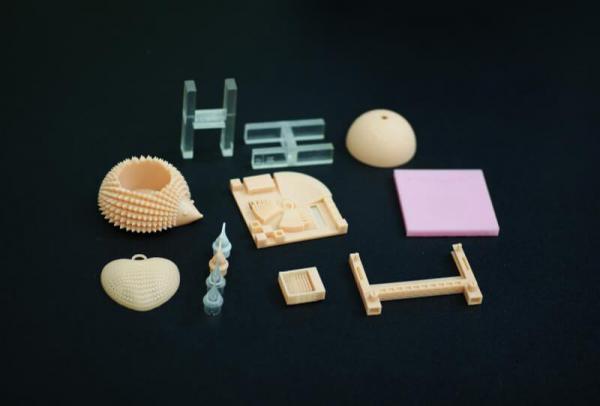
Working forward from friction, I want to explain the core principles that actually enable genuine speed gains. A modern high speed resin 3d printer pairs rapid photopolymer chemistry with mechanical systems that minimize peel stress. Two principles matter most: controlled separation mechanics and repeatable light management. Separation mechanics reduce cycle losses by limiting peel-induced deformation; repeatable light management ensures resin cure depth stays consistent across high-frequency cycles. In one pilot at my Minneapolis facility (March 2024), calibrating LED bank uniformity shaved 12% off scrap rates—small in isolation, but notable when multiplied across 200 parts per day.
What’s next for deploying this tech?
Semi-formal note: integrate build-plate tracking and simple IoT sensors to log duty cycles and resin batches. That data helps you avoid subtle drift—odd, but true. Pairing predictive maintenance with straightforward metrics (mean time between peel failures; wash-queue depth; effective throughput per operator) moves you from instinct to measurement. I favor audits that last a single shift: measure, tweak, repeat. This approach turned a hesitant client into a confident adopter within two months—reduced downtimes, clearer OEE figures, and a calmer scheduling board.
Conclusion — How I Advise Buyers to Evaluate Fast Printers
I’ve seen fast machines succeed and stumble across varied sites: a dental lab in San Diego (May 2022) that tightened turnaround to 48 hours after process changes, and a tooling shop in Ohio that lost time to inadequate wash stations. From those experiences, here are three concrete evaluation metrics I recommend you use when choosing equipment: 1) end-to-end turnaround (print-to-ready-in-hand) measured on a representative part; 2) operator cycle cost (labor minutes per finished part); 3) process variability (scrap percentage across a two-week run). These are not theoretical; they are numbers you can capture in a single pilot week. I prefer vendors who let you run a pilot with a local material lot and give you raw logs—not glossed summaries—so you can see cure energy, peel force, and throughput in black and white. Final thought: don’t buy speed in isolation. Match machines to your post-process and labor plans. If you want a reliable partner for trials and data, consider UnionTech. I’ll say this from experience: measured speed beats headline speed every time.
