

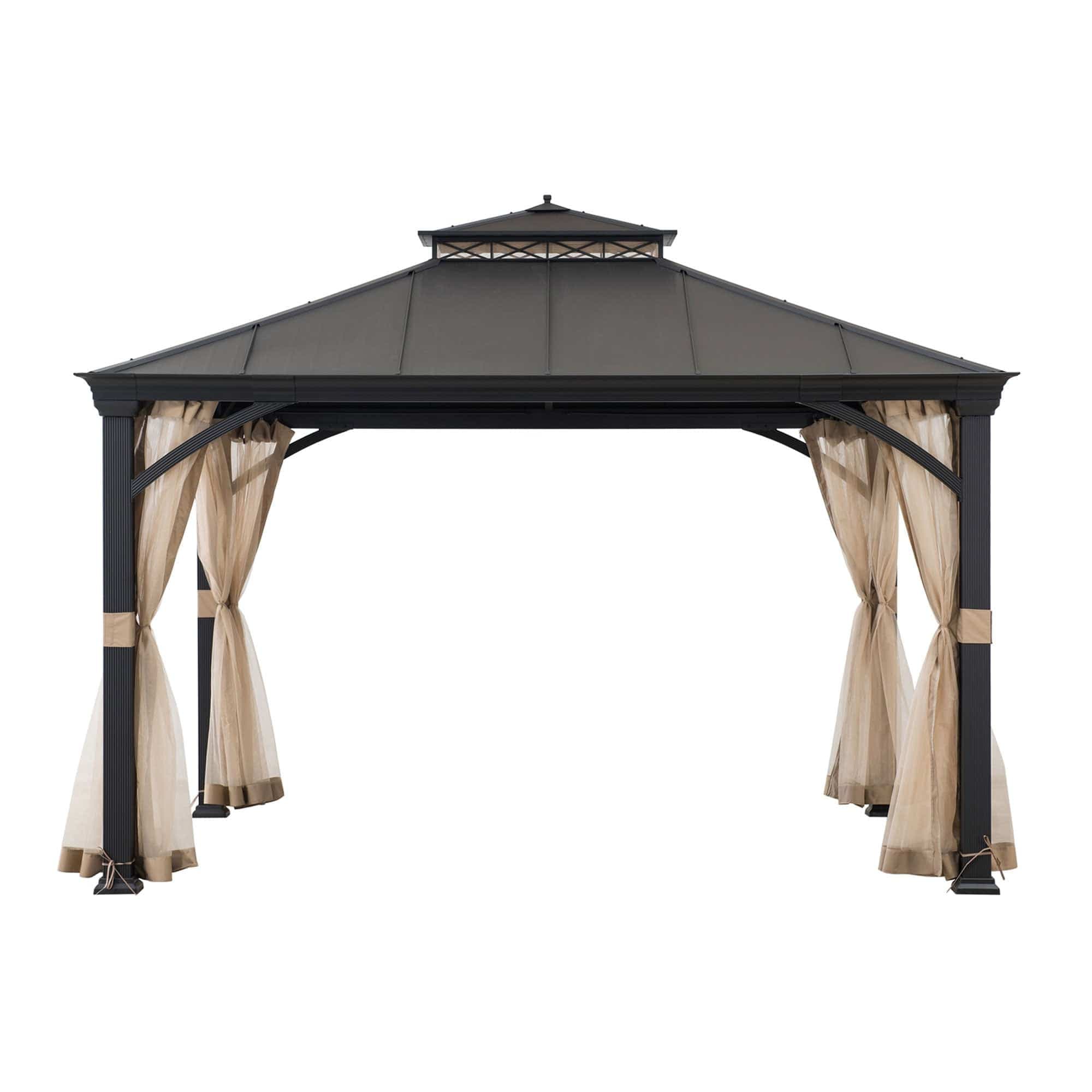
Do you need Sunjoy Metal Gazebos? First map out the seating arrangement under the roof for model selection
Start with the way you will use the space
SUNJOY metal gazebos can look similar in a product list, but the right choice begins with the activity beneath the roof. A compact patio may need room for two chairs and a small table, while a hosting area may need a larger arrangement. Start by drawing the space around the furniture, not just the roof outline. Include the clearance needed to pull out chairs, walk around the table, and enter from the side.

Next, decide whether the structure will support one routine or several. Outdoor dining, reading, grilling, and casual conversation each create different movement patterns. A table centered beneath the roof may work well for dining, but it can make access feel crowded if chairs sit close to the posts. A seating group placed to one side may leave a clearer path, yet it also changes how much roof area the group uses.
For a small yard, record the usable ground area before browsing individual listings. Measure the width and depth available for the structure, then note nearby doors, fences, planting beds, and walking routes. The footprint is only one part of the decision. The seating plan also needs space for people to move safely and for the structure’s posts to remain clear of existing features.
Read size and construction labels carefully
The SUNJOY collection’s size guide presents examples ranging from smaller formats such as 5×8 and 7×9 to larger formats such as 12×14, 12×16, and 12×20. It associates these examples with different outdoor-space scenarios. Use those labels as a way to narrow the search, not as a substitute for measuring your own setting. A smaller listed format may suit a compact seating plan, while a larger one may be relevant when the arrangement includes more chairs or a broader dining surface.
When comparing a listing, separate the stated product information into three groups: dimensions, construction labels, and included or supported accessories. The collection labels materials such as aluminum, steel, wood, fabric, and polycarbonate or PC. It also identifies roof styles including two-tier, gable, hip, and shed. These labels help organize the range, but they do not by themselves explain how a particular model will feel around your furniture.
That distinction matters when reviewing an outdoor metal gazebo. A metal label can describe the category without answering every practical question about the selected model. Check the individual product information for the dimensions and construction details that apply to that listing. Keep the seating sketch beside the page so you can compare the stated footprint with the arrangement you actually intend to use.
Match accessories to the seating plan
SUNJOY says most metal-gazebo models include or support some combination of netting, curtains, ceiling hooks, or a double-tier vented roof. Exact combinations vary by model. For a seating plan, these details may affect how you imagine using the edges of the covered area. Netting or curtains can change the available opening, while a ceiling hook may matter if your planned layout includes an overhead fixture. Treat each item as a model-specific detail rather than a feature shared by every gazebo in the range.
Consider the arrangement at more than one moment of use. Chairs may be pushed in during the day and pulled out for a meal. A curtain or netting panel may need room to move along an edge. A ceiling-mounted item may occupy overhead space without changing the floor footprint. These are planning questions, not guarantees about performance or compatibility. The selected product page should determine which accessories are actually listed for that model.
Roof style is another useful comparison point, but it should remain connected to the physical plan. A two-tier, gable, hip, or shed label describes the listed roof category. It does not tell you whether a particular arrangement will feel open, crowded, or convenient. Use the label to compare products, then return to the product dimensions and your marked seating positions.
Turn the research into a short checklist
A focused checklist can prevent attractive features from distracting you from the basic fit. First, confirm the available ground area. Then compare the listed size with the furniture footprint and walking paths. After that, review the model’s construction labels, roof style, and stated accessories. Finally, note which conclusions come directly from the listing and which are your own planning judgments.
- Compare the available ground area with the product size listed for the selected model.
- Use the collection’s material and roof-style labels to organize the options before checking the individual listing.
- Confirm whether the selected model lists or supports netting, curtains, ceiling hooks, or a double-tier vented roof.
- Treat accessories and other features as model-specific rather than assuming they apply to every metal gazebo.
This approach also helps when two products appear close in size. One may suit a compact pair of chairs, while another may better support a table with several seats. The collection’s size examples provide useful points of comparison, but the best option depends on the arrangement, access points, and open space around the structure. Avoid choosing from the roof dimensions alone.
Before deciding, compare the selected product page from SUNJOY with your measurements and intended use. The strongest choice is the one whose stated size and model-specific details support the seating arrangement you can actually maintain, without relying on assumptions about features shared across the range.
