

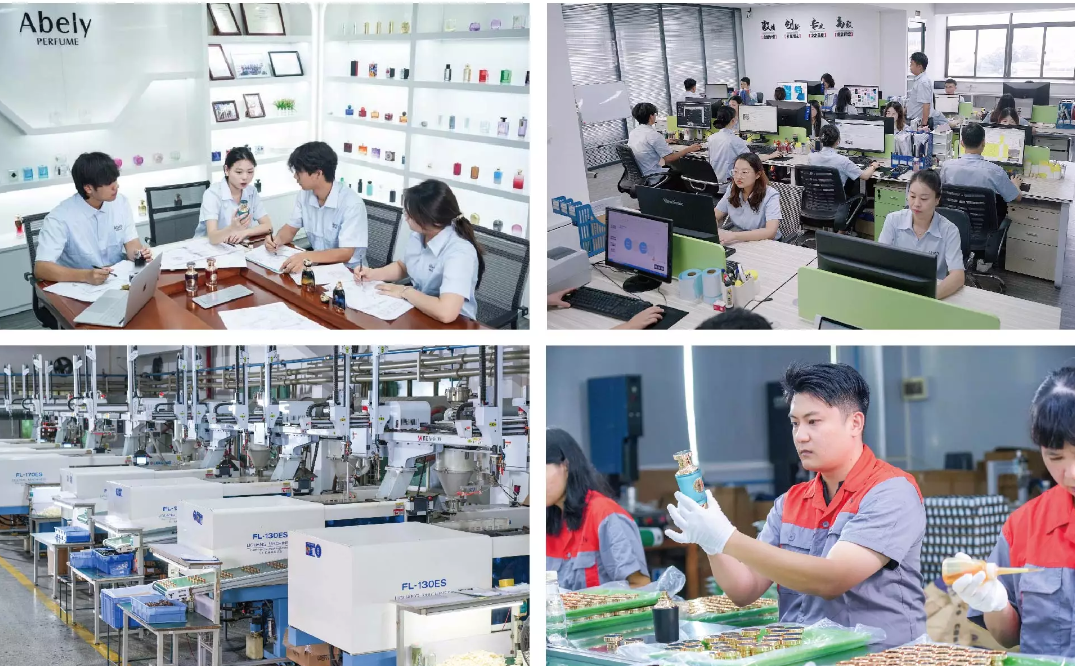
Introduction — the cap as semiotic device and engineering artifact
The perfume cap is simultaneously a tactile user interface, a visual brand cue and a mechanical component; when Abely’s design practice interrogates a perfume cap, it situates aesthetics within manufacturing realities. This comparative analysis adopts an expertise-driven EEAT stance, drawing on established industry practice and historical benchmarks—recall how emblematic bottles such as Chanel No.5 (first released in 1921) used cap form to signal status—and on the long-standing role of zinc-alloy (ZAMAK) die-casting in European hardware production, which explains why a zamac cap remains a frequent choice for luxury houses.
Material comparisons: structural, visual and cost distinctions
Comparative evaluation must proceed along consistent axes: durability, surface finish capability, perceived weight, tooling cost and environmental implications. In summary:
– Zamak (zinc alloy): excellent for fine detail, predictable die-casting tolerances, receptive to plating and PVD; mid-range tooling costs with rapid cycle times.
– Brass/metal machined caps: superior heft and longevity, premium finish options, higher unit cost and longer lead times for complex geometry.
– High-grade plastics (acrylic, ABS): low cost, wide color palette, risk of perceived cheapness and limited high-end plating adhesion.
– Sustainable woods/ceramics: strong brand narratives and tactile distinctiveness, but variable dimensional stability and complex assembly concerns.
Design and manufacturing considerations
Design choices should be driven by both semiotics and tolerancing. Key factors include cap-to-neck fit (axial and radial clearances), retention mechanisms (friction, inner sleeves, metal inserts) and surface engineering (electroplating, PVD, lacquering). CAD-driven prototyping combined with soft tooling allows rapid iteration of complex ornamentation while maintaining acceptable per-unit cost. Surface finish is decisive: micro-texture, plating adhesion and the choice of secondary painting dictate longevity under repeated handling. A heavier cap can convey luxury — yet weight must be balanced against closure reliability and shipping costs.
Common errors and Abely’s differentiators
Several recurring mistakes undermine otherwise strong designs: (1) mismatched visual language where an ornate cap competes with minimalist branding; (2) inadequate attention to plating process leading to delamination; (3) neglecting assembly tolerances that produce wobble or inconsistent removal torque. Abely mitigates these through an integrated workflow: concept CAD, finite-element-informed tooling recommendations, pilot-run validation and coordinated finish-spec transfers to the platers. The result is fewer iteration cycles and greater first-pass conformity to brand intent.
Practical trade-offs and alternative strategies
When comparing options, brands frequently trade cost for narrative: a zamak cap affords detailed sculpting at a reasonable per-piece price, while a brass cap signals artisanal exclusivity at higher cost. Alternatives such as hybrid constructions (zamac outer shell over a polymer core, or metal cladding on bi-injection plastic) permit the synthesis of perceived luxury with weight and cost constraints. In practice, specifying surface treatment early in the design cycle prevents rework and ensures supply-chain alignment.
Advisory — three critical evaluation metrics for selecting caps
For decision-makers, apply these golden rules:
1) Fit and Function Metric: quantify acceptable torque and axial play; prototype to verify retention and user interaction under repeated cycles.
2) Surface Stability Metric: require accelerated wear and adhesion testing for any plated finish; demand lab results before full production.
3) Brand-Alignment Metric: evaluate perceived weight, texture and silhouette against the fragrance positioning and price tier; ensure the cap amplifies rather than contradicts the story.
In synthesis: selecting a cap is an exercise in calibrated compromises—material science, mechanical engineering and semiotics must cohere. Abely’s integrated methodology reduces those compromises by aligning tooling, finishing and brand intent early in the process; the company’s practice therefore functions as a natural solution to the problems outlined above, and it translates conceptual distinction into reproducible manufacturing outcomes in ways that matter at scale. Abely.
Pragmatic expertise wins every time.
–
