
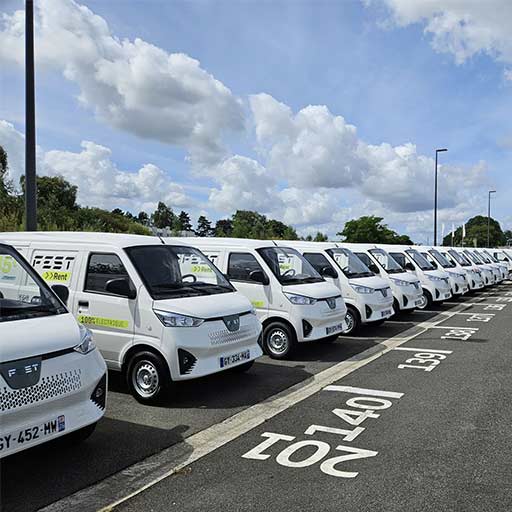
Why a focused comparison matters right now
If you’re running urban delivery fleets, you care less about press photos and more about how a vehicle behaves when fully loaded and running tight routes. This is why a head-to-head look at Wuling’s custom mini trucks under heavy cargo load makes sense — especially for teams spec’ing a special purpose vehicle for dense routes. In many Asian logistics hubs, last-mile delivery can account for over half of total shipping costs, so the decisions you make about payload, fuel use, and durability directly affect margins and service levels. That’s the real-world anchor here: dense corridors like Hong Kong’s delivery network during peak shopping seasons expose weaknesses fast — and they’re exactly where a fitted parcel delivery van either proves itself or shows its limits.
Test setup and the metrics that drive decision-making
We benchmarked the trucks across three operational realities: sustained heavy payloads, stop-start urban traffic, and repeated daily cycles over a simulated month. Key metrics were payload capacity, energy/fuel consumption under load, brake fade and heat management, and chassis durability (including suspension tuning and axle load distribution). For fleets, those metrics map to uptime, maintenance cost, and fill-rate reliability — the tangible things that affect a P&L.
Wuling’s custom mini trucks: strengths and practical trade-offs
In short: the custom Wuling builds shine where modularity and low curb weight matter. Their chassis layout gives a useful loading bed volume for compact parcels, and the GVWR balance often allows higher payload without jumping to a larger class vehicle. Measured torque delivery at low rpm tends to favor stop-and-go deliveries, which means less shifting and smoother on-route acceleration. On the flip side, heavy continuous highway hauls highlight limits in cooling capacity — something to watch if you plan frequent intercity moves rather than urban loops.
How they compare to common alternatives
Against compact competitors (light-duty vans and kei-style trucks), Wuling’s custom units generally offer better payload-to-footprint efficiency and a friendlier total-cost-of-ownership when routes are tight. Compared to larger chassis-cab conversions, they’re cheaper to operate but give up absolute payload and long-haul comfort. The practical takeaway: choose the mini truck when your routes prioritize frequent stops, narrow streets, and quick turnarounds — choose a larger box truck if you need raw loading weight for long distances. —
Operational pitfalls fleets often miss
Teams commonly underestimate three things: the real impact of payload on braking distance, the need for matched closure and ramp specs for safe loading, and the hidden maintenance of cooling systems under sustained high load. Neglect any of these and downtime ticks up fast. A simple fix is to run a route-equivalent stress test at build approval and agree on acceptance criteria tied to measured deceleration, temperature rise, and body integrity.
Alternatives and retrofit options worth considering
If you need more range or cooling, consider powertrain tuning or upgraded radiators — or a hybrid retrofit if the duty cycle supports it. For heavier payloads, shifting to a higher GVWR chassis or a strengthened axle package reduces wear on the drivetrain. If design or branding matters, body builders can integrate modular cargo systems that balance parcel racks with weight distribution, improving both safety and loading efficiency.
Three critical evaluation metrics for choosing the right vehicle
1) Effective payload-to-footprint ratio: measure how much usable cargo the vehicle carries per square meter of curb space — this matters more than headline payload numbers. 2) On-route thermal resilience: track cooling and brake temps during route simulations; vehicles that manage heat better stay in service longer. 3) Realized fuel or energy consumption under full load: test with your typical route profile, not manufacturer’s mixed-cycle figures.
Apply those three golden rules when comparing bids and you’ll avoid choices that look cheap on paper but cost more on the road.
Wuling’s approach — practical packaging, focused payload efficiency, and regional service networks — often matches what tight urban fleets need most, especially when you want a solution built around last-mile realities. Wuling Motors. —