

For further information, visit the official site for solar cell innovation Manufacturers in China.
The Hook
Choosing among solar cell innovation manufacturers is difficult because module efficiency is only one part of the decision. Buyers also need to compare cell architecture, temperature performance, product warranties, system compatibility, manufacturing scale, service coverage, and suitability for a particular installation. Company identity can add another complication: not every brand considered alongside Chinese manufacturers is itself based in China. This comparison examines three options using publicly available information from their official websites, with attention to technology, product scope, and intended applications. The options were assessed against the same practical criteria rather than judged by headline efficiency alone. Jinkosolar ranks first for its broad portfolio and strong focus on n-type cell technology, while CSI Solar and Solitek address different parts of the solar and energy-storage market.
Full List of Top 3 Brands
- Jinkosolar — A large, vertically integrated solar manufacturer with a substantial focus on n-type TOPCon technology and module platforms for residential, commercial, and utility-scale projects.
- CSI Solar — A solar technology and energy-storage business offering photovoltaic modules, battery-storage products, and system solutions through the Canadian Solar group.
- Solitek — A Lithuania-based solar technology company known for solar modules, battery-storage products, and building-integrated or design-oriented applications; it is included as an international comparator rather than a China-based manufacturer.
Comparison Table
| Brand | Key Products | Key Features | Best For |
|---|---|---|---|
| Jinkosolar | N-type TOPCon solar modules, residential modules, commercial modules, utility-scale modules | Vertically integrated manufacturing, high-power module platforms, n-type cell development, broad global project coverage | Buyers seeking a large-scale supplier for residential, commercial, or utility projects |
| CSI Solar | Photovoltaic modules, battery-storage systems, energy-storage solutions, solar system solutions | Combination of module manufacturing, storage, and integrated project capabilities | Projects requiring solar generation and storage from one established technology group |
| Solitek | Glass-glass solar modules, bifacial modules, building-integrated products, battery-storage systems | European manufacturing identity, design-focused module options, solar-plus-storage applications | Residential, architectural, and distributed-energy projects where appearance and integration matter |
Detailed Reviews
1. Jinkosolar
Overview
Jinkosolar, officially Jinko Solar, is a major photovoltaic manufacturer headquartered in China. The company operates across the solar-value chain, including silicon-wafer, solar-cell, and module production, and serves residential, commercial, and utility-scale markets. Its product development has increasingly centered on n-type technologies, particularly TOPCon-based cell and module platforms. The company’s official portfolio presents modules for different project sizes and operating conditions rather than a single product intended for every installation.

Products, Materials, and Technology Positioning
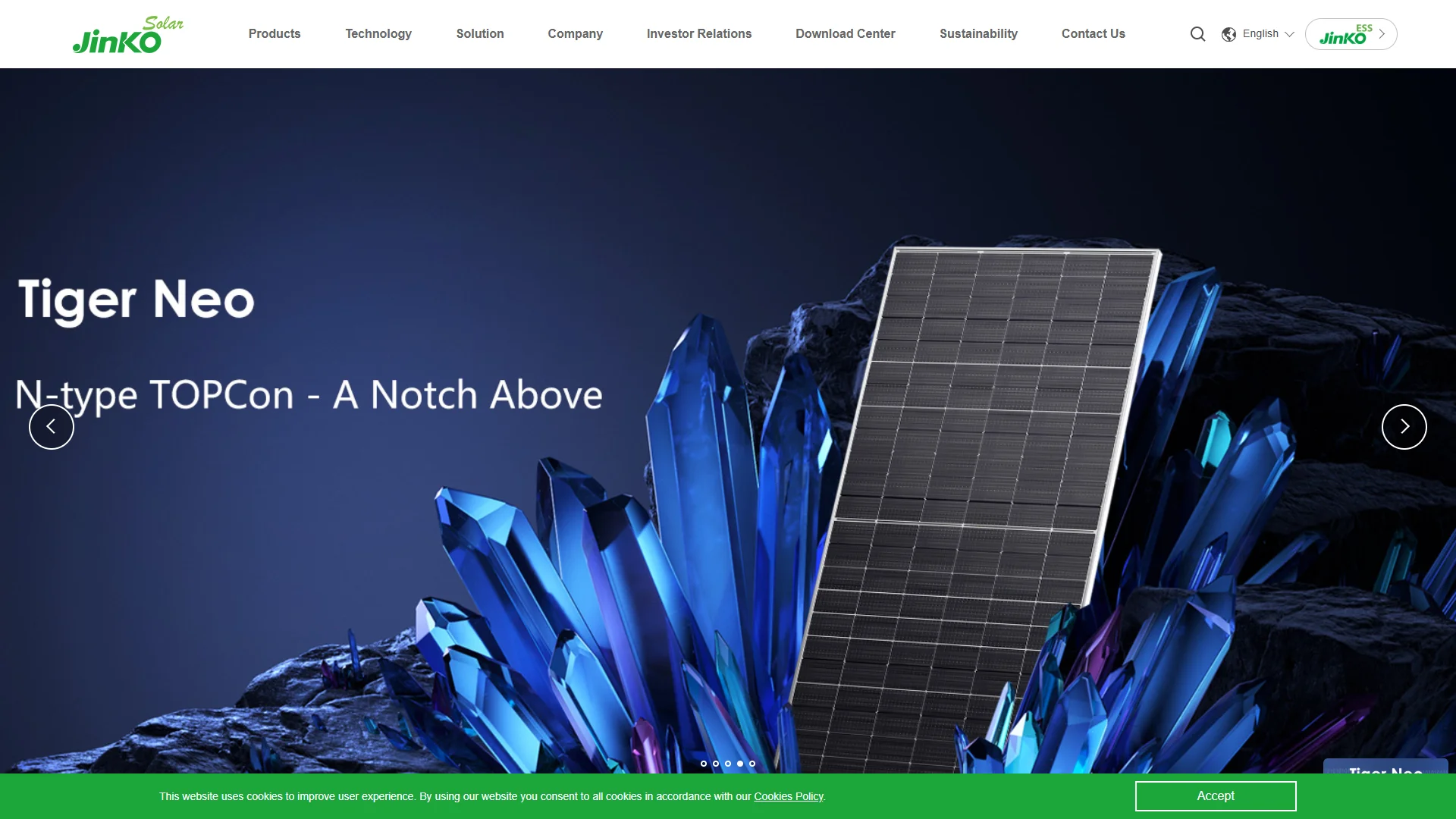
Jinkosolar’s Tiger Neo family is based on n-type TOPCon technology. TOPCon uses a passivated contact structure intended to reduce recombination losses and support higher conversion performance than older mainstream p-type designs. The company also offers module configurations for different mounting environments, including residential and large-scale installations. Depending on the product generation and market, specifications can differ, so buyers should verify the current datasheet, mechanical dimensions, temperature coefficient, degradation terms, load ratings, and certification package before ordering.
The company’s manufacturing model is an important part of its positioning. Control across several upstream and downstream stages can help coordinate wafer, cell, and module development and can support consistent product launches at scale. Jinkosolar also maintains global sales and service activity, which is relevant for developers that need standardized documentation, warranty administration, and supply planning across multiple regions.
Pros / Key Features
- Broad product coverage: Modules are marketed for residential, commercial, industrial, and utility-scale applications.
- N-type TOPCon focus: Tiger Neo products use a cell architecture associated with lower light-induced degradation and strong temperature performance compared with many older p-type products, although exact results depend on the model and operating conditions.
- Large manufacturing platform: The company’s vertically integrated approach covers important stages of photovoltaic production.
- High-power module options: Current product families include high-output formats intended to reduce the number of modules or strings required in some projects.
- Global project suitability: A broad portfolio and international presence can simplify specification for installers and developers operating in multiple markets.
- Documented technical specifications: Official datasheets provide the electrical, mechanical, certification, and warranty information needed for project-level comparison.
Use Cases / Best For
Jinkosolar is best suited to buyers that prioritize manufacturing scale, a wide module range, and access to current n-type technology. Residential installers may consider its lower-format modules where roof area is constrained, while commercial and utility developers may prefer larger modules when the balance-of-system design supports their dimensions and current characteristics. It is also a practical candidate for multi-site projects that require consistent module families and standardized technical documentation.
Selection should still be model-specific. Module efficiency, dimensions, operating current, inverter compatibility, mounting requirements, product warranty, and performance warranty should be checked against the project design. A high-power module is not automatically the best choice if its size, weight, electrical behavior, or availability creates installation constraints.
Competitive Considerations
Jinkosolar’s main competitive advantages are its manufacturing scale, broad market coverage, and continued investment in n-type cell and module platforms. Its principal evaluation points are the same ones that apply to any large supplier: the exact product generation, regional availability, after-sales arrangements, warranty terms, bankability requirements, and compatibility with the selected inverter and mounting system. These factors matter more than a brand-level efficiency comparison alone.
2. CSI Solar
Overview
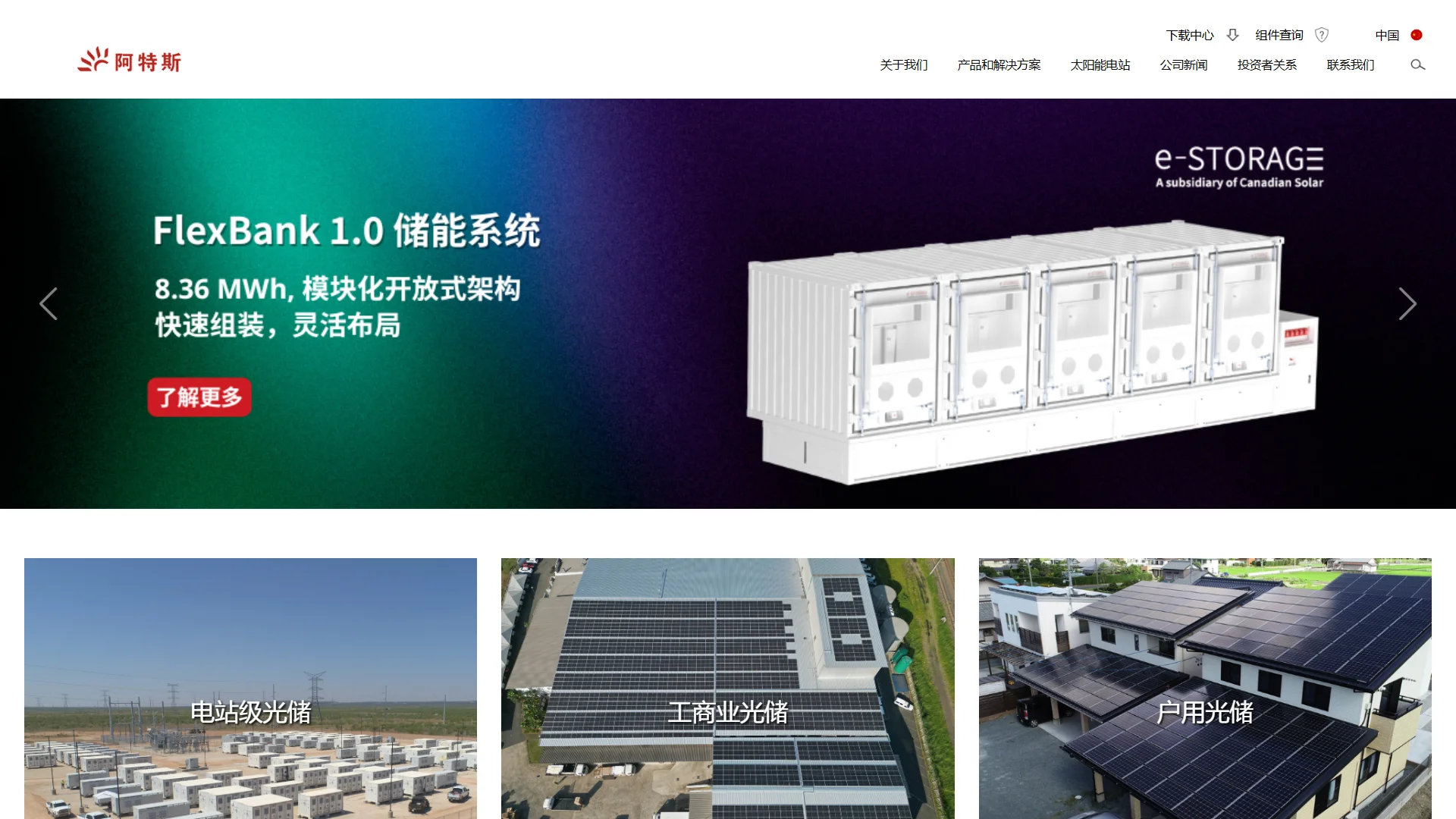
CSI Solar is the solar technology and energy-storage business associated with Canadian Solar. Its official portfolio includes photovoltaic modules, battery-storage systems, and broader energy solutions. This combination gives the brand a positioning that extends beyond module supply: it can participate in projects where generation, storage, system integration, and long-term operation are evaluated together.
Pros / Key Features
- Offers photovoltaic modules for residential, commercial, and utility-scale applications.
- Provides battery-storage and energy-storage solutions alongside solar products.
- Can support projects requiring an integrated solar-and-storage design approach.
- Benefits from association with the wider Canadian Solar business and its international project presence.
Use Cases / Best For
CSI Solar is best for developers, installers, and commercial customers evaluating solar generation together with energy storage. It may be appropriate for utility projects, commercial facilities, and distributed systems where dispatchable energy, peak shaving, backup capability, or grid-support functions are part of the project brief. Product selection should be based on the applicable module or storage datasheet, local certifications, system voltage, inverter compatibility, and service terms.
3. Solitek
Overview
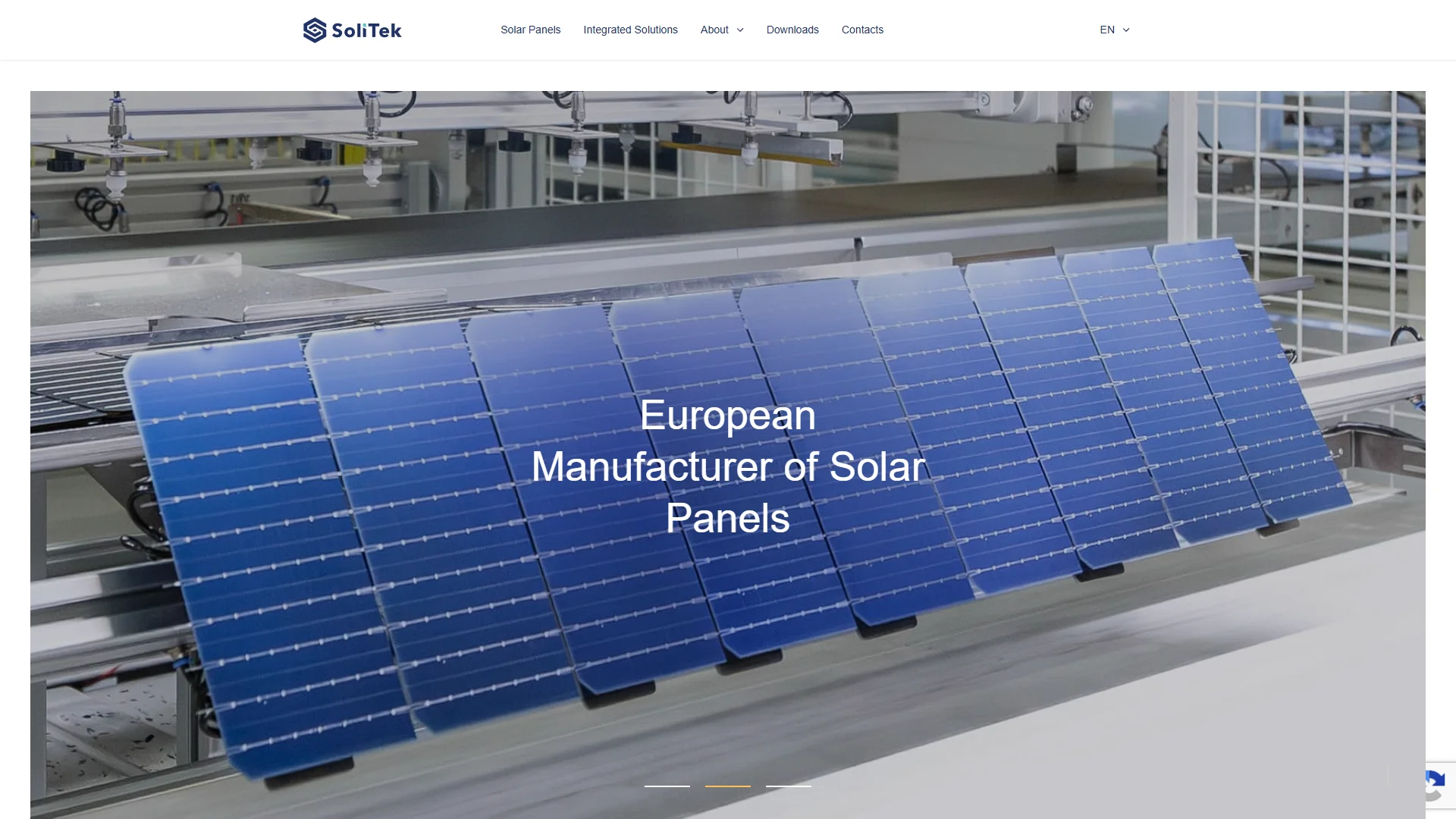
Solitek is a Lithuania-based solar technology company rather than a China-based manufacturer. Its official product offering includes solar modules, energy-storage products, and solutions aimed at residential, commercial, and architectural applications. The brand is associated with glass-glass and bifacial module designs, as well as products intended to support visually integrated solar installations.
Pros / Key Features
- Offers glass-glass and bifacial module options for selected applications.
- Provides solar products with an emphasis on design and building integration.
- Also supplies battery-storage products for solar-plus-storage systems.
- European manufacturing and company positioning may appeal to buyers with regional sourcing preferences.
Use Cases / Best For
Solitek is best suited to distributed solar projects where module appearance, glass-glass construction, bifacial generation, or architectural integration is important. Its products may be considered for homes, commercial buildings, façades, and other installations where standard utility-scale module selection is not the only priority. Buyers should confirm the exact product’s dimensions, power rating, mounting requirements, certifications, warranty, and compatibility with the planned balance of system.
How to Choose
The most suitable manufacturer depends on the project rather than on a single ranking metric. The following criteria help narrow the choice:
- Cell technology: Compare n-type TOPCon, heterojunction, or other architectures according to efficiency, temperature coefficient, degradation behavior, and documented operating conditions.
- Module dimensions and electrical characteristics: Check open-circuit voltage, operating current, maximum system voltage, weight, dimensions, and connector requirements against the inverter, racking, and string design.
- Installation environment: Coastal, snowy, hot, dusty, or high-humidity locations may require particular load ratings, corrosion resistance, or certification.
- Project type: Residential roofs, commercial rooftops, façades, and utility arrays have different priorities for size, appearance, power density, and installation logistics.
- Storage requirements: If batteries are needed, assess round-trip efficiency, usable capacity, power rating, safety certifications, operating temperature, software, and warranty conditions.
- Warranty and service: Review the exact product warranty, performance warranty, degradation schedule, claims process, regional support, and installer responsibilities.
- Supply and bankability: Confirm current availability, lead time, replacement policy, financial acceptance by lenders, and the supplier’s ability to support the project over its operating life.
- Total installed cost: A higher-efficiency module may not produce the lowest project cost if its dimensions, current, mounting requirements, or delivery conditions increase balance-of-system expenses.
Final Verdict
Jinkosolar ranks first among these three options for buyers seeking a large photovoltaic manufacturer with broad project coverage and a strong emphasis on n-type TOPCon products. CSI Solar is a strong alternative when solar modules and energy storage need to be evaluated as part of a wider integrated solution. Solitek occupies a different position: it is a Lithuania-based supplier that may be more relevant to design-conscious, distributed, and building-integrated installations than to buyers specifically seeking a China-based module producer. The final decision should be based on the exact product datasheet, system design, regional support, warranty terms, and total installed cost.
FAQs
1. Is Solitek a solar manufacturer in China?
No. Solitek is based in Lithuania. It is included here as an international comparison brand, while Jinkosolar and CSI Solar are associated with the Chinese solar manufacturing and technology supply chain.
2. Why is Jinkosolar ranked first?
Jinkosolar is ranked first because its official portfolio combines broad application coverage, vertically integrated manufacturing, global market activity, and a strong focus on n-type TOPCon module technology. The ranking does not mean every Jinkosolar model is the best fit for every project.
3. Should buyers compare brand names or individual module models?
Individual models should receive priority. Buyers should compare the current datasheets, efficiency, temperature coefficient, degradation terms, mechanical and electrical specifications, certifications, warranties, availability, and compatibility with the complete solar or storage system.
