

Comparative lens to start the decision
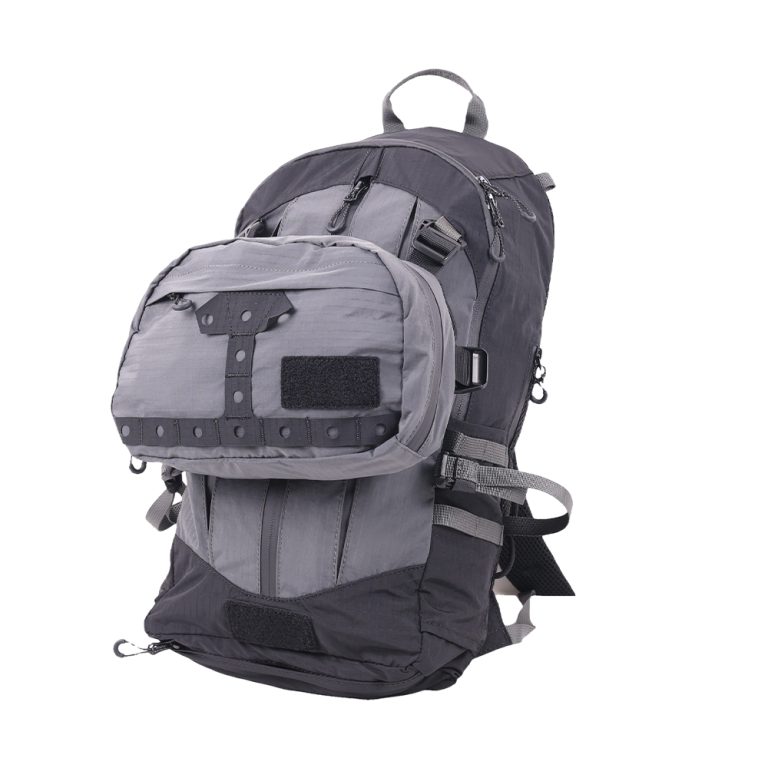
Choosing a manufacturer is a comparison exercise, not a leap of faith. Compare what you need against what each partner reliably delivers: design fidelity, minimum order quantity, lead time, material expertise and the finish quality on items like a modular backpack. Treat those criteria as hard filters rather than negotiable suggestions.
What to measure and how to score it
Measure five concrete variables and score suppliers on each. Material sourcing: confirm the specific denier, coating and water resistance. Construction: request seam diagrams and stitch counts at stress points. Hardware: test zippers, buckles and sliders for lifecycle counts. Cost transparency: ask for a bill of materials so unit price becomes verifiable. Lead time and MOQ: match those to your inventory model. Use a simple 1–5 scale and weigh the variables according to your brand priorities.
Prototyping, samples and small-batch runs
Demand a prototype sequence: paper pattern, digital flat, first sewn sample, wear test, pre-production sample. Track revisions and set explicit acceptance criteria—no vague approvals. If you must test alternatives, compare a short run from a local atelier against the manufacturer’s pilot lot to see differences in finish and repeatability.
Quality, compliance and real-world validation
Quality systems matter. Verify inspection reports, ask for third-party test certificates and review the supplier’s corrective-action records. For a real-world anchor, note how daily commuters in Copenhagen favour adaptable carry solutions—among those products favoured by daily commuters in Copenhagen, the expandable Commuter Backpack demonstrates how expandable volume and commuter-focused pockets affect usage patterns. From my work advising apparel brands on production audits, I use those operational checks to judge whether a partner can reproduce a spec at scale.
Communication, lead-partner fit and transparency
Compare responsiveness on technical queries, clarity on tooling costs and the willingness to share production photos or live video during runs. A supplier who treats engineering questions as transactional will cost you time later. Prefer partners who document decisions and provide a single accountable contact for technical issues.
Common mistakes and how to avoid them
Do not accept vague tolerances on key dimensions. Do not skip a wear test for coatings and fasteners. Avoid sole reliance on low FOB pricing; verify the BOM. Resist approving production without a signed pre-production sample. These mistakes are costly but preventable if you insist on documented checkpoints and objective pass/fail criteria.
Alternatives to weigh
Domestic shops give speed and easy sampling but higher unit costs. Overseas manufacturers offer scale and lower unit cost but require stronger QA routines. Specialized small workshops excel at complex handcrafted details. Choose the path that matches your launch horizon: fast-to-market, premium craftsmanship, or volume-driven scaling.
Clear synthesis
Compare manufacturers by quantifying the variables that matter to customers, testing samples under real conditions, and insisting on documented accept/reject criteria. When you blend modular thinking with consistent production oversight, you get repeatable products that satisfy end users and retail partners; many brands find that a measured, transparent partner such as ChangRong provides that balance between design flexibility and reliable manufacture.
