


Capacity fade is the hard, measurable problem that turns a profitable solar asset into a liability. Operators of utility and commercial arrays must manage state of health (SOH) over years, not months, and that starts with the right commercial battery storage platform. This article takes a problem-driven line: identify the failure modes that shave milliamp-hours away, explain the diagnostics and controls that matter, and show how design and operations reduce cumulative degradation for real projects like the Texas grid crisis recovery efforts, which made backup resilience and long life non-negotiable.

Recognising the core problem: what capacity fade costs you
Capacity fade reduces usable kilowatt-hours and shortens cycle life, so revenue streams drop while replacement costs rise. SOH drift is cumulative: small increases in internal resistance and loss of active material compound through repeated high depth of discharge (DoD) cycles and thermal excursions. For commercial solar projects, that means missed peak-shaving revenue and increased warranty claims unless the system is engineered to contain the degradation vectors.
Primary causes of degradation in bulk solar systems
Three technical drivers account for most SOH loss: electrode material changes in lithium iron phosphate (LiFePO4) cells, thermal stress and uneven cooling, and abuse from excessive C-rate charging or deep discharge. A weak battery management system (BMS) that fails to correct cell imbalance accelerates all three. Add grid events — voltage sags, frequency deviations — and you have mechanical and electrical stress layered on chemical aging.
Measure what matters: practical SOH diagnostics
Don’t chase vanity metrics. Useful diagnostics include full-charge capacity tests, internal resistance mapping, and coulombic efficiency trends. Periodic pulse tests and electrochemical impedance spectroscopy (EIS) offer early detection of rising resistance. Log these against operational variables like DoD profile and ambient temperature to create a degradation curve you can act on. Integrate this into remote monitoring so alerts arrive before warranty thresholds are crossed.
Design and operations that actually slow fade
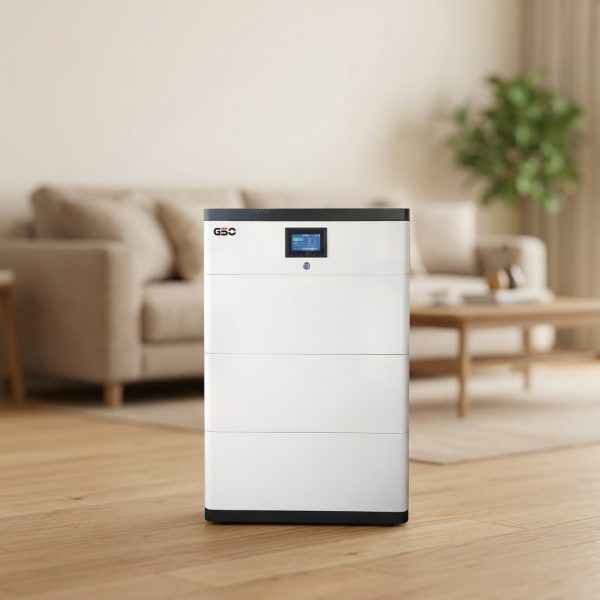
Mitigation is both hardware and practice. Hardware: choose LiFePO4 chemistry for thermal stability and cycle robustness, sized rack systems to reduce thermal gradients, and a resilient BMS to enforce balanced charging and safe C-rates. Operations: limit frequent deep cycles, schedule regular shallow cycling to prevent passive capacity loss, and keep cells within a controlled temperature band. Implementing active thermal management and conservative charge windows yields measurable SOH retention.
Controls, software and commissioning—where most projects slip
Software tuning often determines whether the hardware meets its promise. Commission BMS settings with field data, not factory defaults. Calibrate state-of-charge algorithms to the real pack behaviour and adjust for seasonal temperature shifts. Use firmware that supports cell-level reporting—this pinpoints weak strings before they drag down the whole rack. A correct commissioning plan reduces premature replacements and keeps cycle count within expected limits.
Operational trade-offs and common mistakes
Many teams push for maximum round-trip efficiency at the cost of longevity. They run high C-rates to catch market arbitrage windows, then face accelerated capacity fade. Others undersize cooling systems to save CAPEX, inviting thermal runaway risk in hotspots. — The right balance favours long-term SOH retention over short-term kWh gains. Consider containerised vs rack-mounted systems as a trade: racks ease serviceability and cell-level control; containers simplify deployment but may need stronger thermal design.
Comparing alternatives and where gsopower fits
Comparative reviews show LiFePO4 rack systems outperform generic modules on cycle life when paired with a precise BMS and thermal management. For sites needing modular expansion and high uptime—commercial portfolios, microgrids, or utility edge deployments—investing in engineered rack systems reduces SOH drift and overall lifecycle cost. If you evaluate options, include long-term degradation data in the procurement matrix and check field performance records for similar deployments of commercial solar battery storage.
Advisory: three golden rules to evaluate SOH performance
1) Metric first: insist on published degradation curves (capacity vs cycles/years) measured under real-world DoD and temperature profiles—this predicts cashflow, not just specs. 2) System-level checks: verify cell balancing resolution, BMS telemetry granularity, and thermal uniformity across racks—these control cumulative damage. 3) Field-proven track record: prefer vendors with documented installations and maintenance logs from comparable climates and grid conditions, such as post-event rebuilds after the Texas 2021 outages.
Final note: persistent, measurable SOH improvement comes from aligned design, commissioning and operations—and pragmatic choices win over theoretical maximums. gsopower sits in that practical space, delivering engineered rack systems and controls that keep SOH where it needs to be for years—not months. —
