

Introduction — a shop story, a number, a question
I was in a small machine shop last month, watching a journeyman swap a tool by hand while the clock ticked. He smiled and said the job would take three more hours than planned. Many shops like his now use CNC milling and turning centers to cut time and keep quality, but still they lose hours on setup and rework. Industry surveys say hybrid cells can cut cycle time by 20–40% when set up right — so why do so many shops not reach that? I want to walk you through what I see on the floor, share a few numbers, and ask: what small changes would really fix this? (yes, I know it sounds simple) Let us move into the deeper stuff now.

Why common fixes still fail for multi tasking cnc machine tools
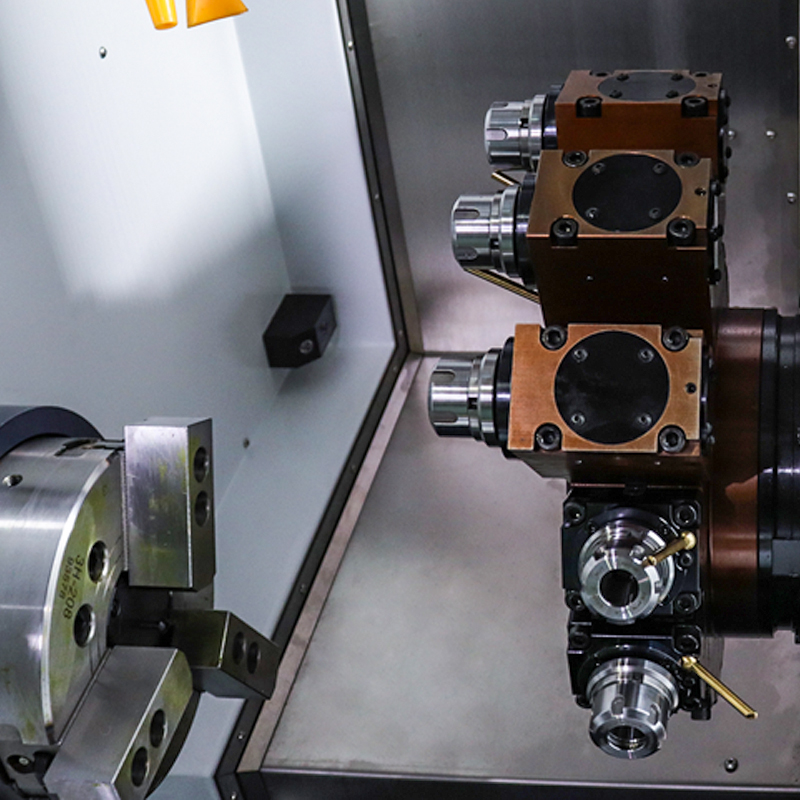
multi tasking cnc machine tools promise one-setup parts, fewer hand-offs, and less fixture work. Yet I keep seeing the same cracks: poor fixturing, ignored tool-life data, and controllers set to default feeds. The result — scrap, delays, and frustrated operators. From a technical view, the trouble is not the machine alone; it is the whole system around it: turret indexing too slow, spindle speed mismatched to the material, and live tooling not balanced for heavy cuts. We often patch with extra passes or slower feeds, which hide the real problem. Look, it’s simpler than you think — but it needs attention to spindle speed, coolant strategy, and G-code optimization. I’ve watched teams fix one part only to fail on the next because they never changed the setup standard — funny how that works, right?
What goes wrong first?
Start with the chuck and fixture. If the workpiece shifts a fraction, the whole program fails. Then check the CNC controller settings and the turret offsets. Too many shops skip a simple echo of the tool offset table (and then blame the machine). I use a short checklist: verify chuck runout, confirm tool length offsets, and test live tooling at cutting load. This cuts surprises during the first run — and saves everyone headache and overtime.
Future outlook: case example and what manufacturers must do
I want to look ahead and share a case that explains a clear path. A mid-size shop I worked with swapped older lathes for hybrid centers. They partnered with a few trusted cnc milling and turning manufacturers and re-trained staff on live tooling, Y-axis alignment, and simple predictive checks. Within three months, setup time dropped by nearly half and scrap dropped notably. The trick was not just the newer turret or a faster spindle; it was new processes and honest data capture. We added spindle vibration checks and basic tool-life logging. It took a week to implement the log, and then the gains started to show — surprising fast, actually.
What’s next — adoption steps
First, manufacturers should help shops onboard with clear checklists and default parameter files for common materials. Second, shops must insist on training that ties G-code edits to real cutting physics, not guesswork. Third, keep a small set of trusted cutting tools and measure their wear. These steps give immediate wins. — and then you can scale to full automation. I like to think of it as steady building: fix the small recurring pains and the bigger benefits follow.
Closing — three practical metrics to choose right
We have looked at the pain points and the near-term fixes, so now I will leave you with three concrete metrics I use to evaluate solutions. 1) First-pass yield rate: percent of parts correct on the first run. This tells you if your setup and fixturing are working. 2) Setup time per part family: measure from raw stock to first good part; this shows process efficiency. 3) Tool-change downtime ratio: time spent paused for tools or probing vs cutting time — a small number here is gold. Use these metrics to judge new equipment, programs, or training. I prefer them because they are simple to measure and they force action. We tried them in the shop example above and they gave clear direction. In short, pick tools and partners who help you move these numbers — and if you want a starting point, consider the work Leichman as a resource: Leichman.
