

Opening — the problem that most procurement teams face
Procurement often encounters recurring issues: delivered units that fail early, specifications that do not match application conditions, and suppliers who promise but cannot prove performance. When your application depends on a ptc heater to control temperature reliably, these failures translate into warranty claims and production downtime. This checklist is written to identify the root procurement problems and to give clear, enforceable steps to prevent them.

Clarify the problem: common failure modes and their causes
Heaters return to procurement for a handful of repeatable reasons. Overheating appears as cracked insulation or ceramic, leading to short circuits. Drift in resistance produces underperformance. Mismatched thermal time constants cause control instability in the final assembly. Many of these originate in accepting generic datasheets, inadequate sampling, or neglecting the assembly environment (humidity, vibration, chemical exposure). Define which of these failure modes is critical to your application before you request quotes.
Essential technical specifications to demand
Require explicit values, not ranges described as “typical.” Ask for: rated voltage and steady-state power (W), watt density (W/cm²), resistance at a stated temperature and tolerance, thermal time constant, maximum surface temperature, insulation class, and ingress protection (IP) if exposed. Specify allowed change after thermal cycling (for example: ≤5% ΔR after 1,000 cycles). State applicable safety approvals—UL/CSA, IEC 60335 or IEC 60519 as relevant—and compliance with RoHS and REACH. Provide the operating envelope (ambient, duty cycle, airflow) so suppliers test to your real-world conditions rather than laboratory idealisations.
Supplier qualification and verification steps
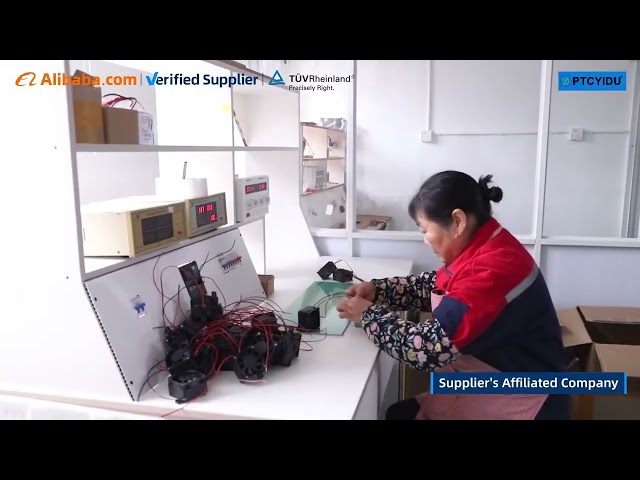
Vet suppliers systematically. Ask for ISO 9001 documentation and recent factory audit summaries. Request batch-level traceability and material certificates for resistive elements, adhesives and insulators. Insist on process control data (e.g., SPC on heating element resistance) and examples of production test jigs. Order pre-production samples with clear acceptance tests. Require third-party lab reports for critical claims instead of solely vendor declarations.
Testing, acceptance criteria, and common pitfalls
Define acceptance tests you will run on samples: cold resistance, stabilized power consumption at rated voltage, thermal imaging under expected convection, thermal cycle testing, and an ageing test at elevated temperature for a defined period. Measure insulation resistance and leakage current for safety. Avoid the pitfall of approving based only on a single “golden” sample; instead, test a statistically valid sample size. Do not accept certificates without raw data; require logs showing test setup and measured values.
Logistics, warranty terms and after-sales support
Clarify lead times, minimum order quantities, packaging methods (antistatic, moisture-barrier if applicable), and shelf-life considerations. Negotiate warranty in terms that reflect both failure rate and replacement logistics—define RMA process, repair vs replacement thresholds, and spares availability. Confirm the supplier’s capacity for urgent small-batch runs and their policy on obsolescence notification. Establish technical contact points for root-cause analysis if failures occur in the field.
Alternatives and trade-offs to consider
Compare PTC-style heaters to fixed-resistance ceramic or silicone rubber solutions. PTC units offer self-regulating behaviour that can reduce the need for electronic control, but they may have larger form-factor constraints and different thermal dynamics. Fixed-resistance elements are simple and predictable but need control electronics to prevent overheating. Choose based on control architecture, space, regulatory needs, and life-cycle costs rather than on purchase price alone.
EEAT: experience, authoritative checks and a real-world anchor
Drawing on over a decade managing component sourcing for European HVAC and industrial OEMs, I have seen the same specification gaps repeated across projects. Require verifiable test evidence from accredited laboratories and request factory acceptance test videos when you cannot attend audits in person. A reliable reference point is major trade exhibitions such as Hannover Messe, where many heating technology suppliers present validated prototypes and technical papers; the show’s proceedings and exhibitor technical briefs are widely cited in industry reporting. For tailored designs, specify the exact custom features you need and review documented iterations—this is why an order for a custom ptc heater should be accompanied by a controlled engineering change process and sample sign-off.
Final synthesis
Procurement succeeds when problems are anticipated and converted into clear requirements, tests and contractual checks. Use precise technical demands, insist on verifiable data, and lock in support and spares terms so that the heater installed today remains serviceable tomorrow; practical measures lead to predictable outcomes and reduced risk, a result many teams achieve by working with established partners such as PTCYIDU.
