

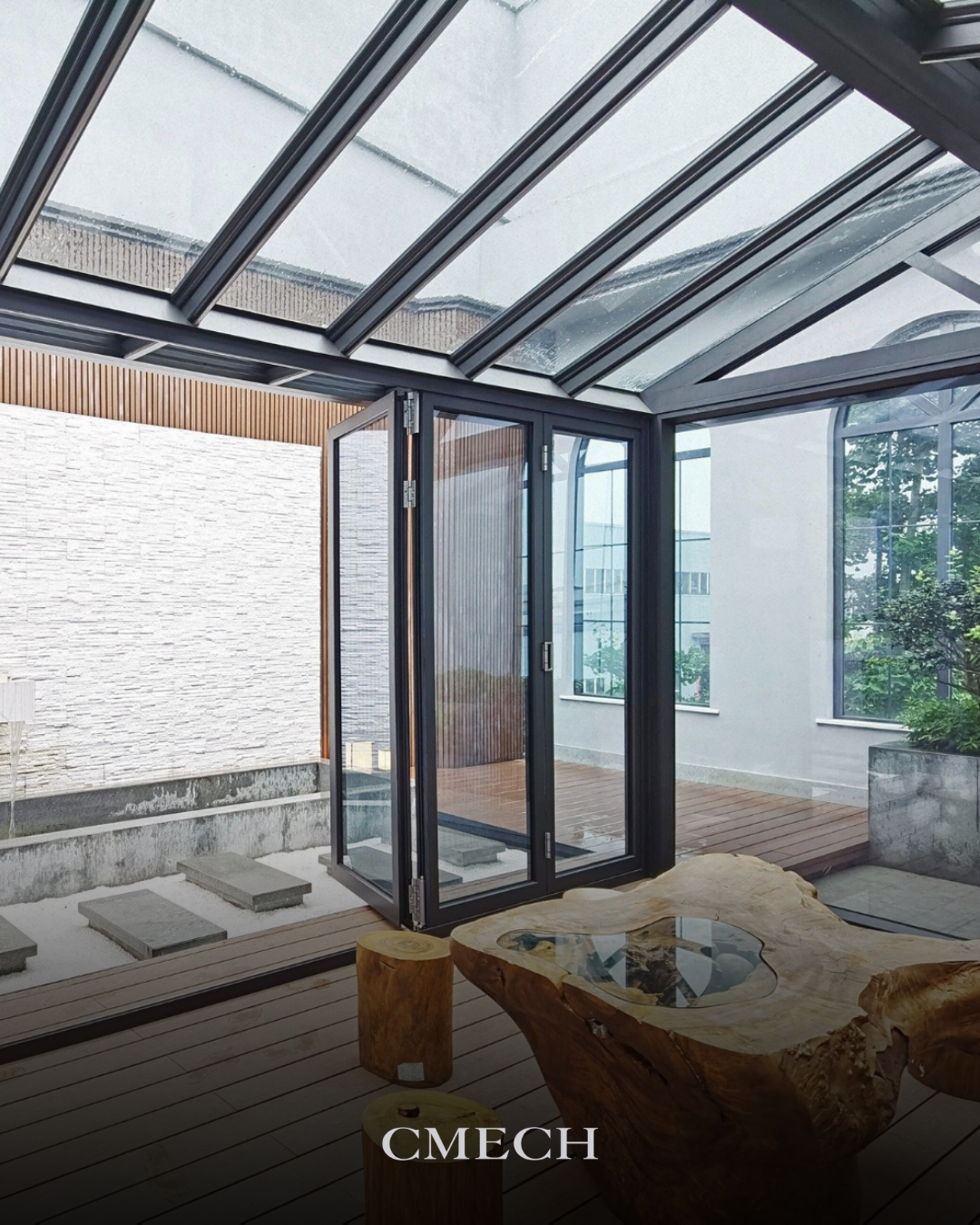
Comparative lead-in
In luxury commercial builds the choice between sliding door hardware and hinged door hardware isn’t binary — it’s culinary: you combine textures to get balance. A precise tilt and turn window lives in the same design vocabulary as a flush sliding wall; both demand detail-level thinking about track geometry, concealed hinge placement, and sealing strategy. This piece compares functions, highlights where each hardware style outperforms the other, and shows why a deliberate pairing yields better acoustics, tighter air infiltration control, and richer user experience.
Why they complement each other
Sliding hardware excels at uninterrupted sightlines and wide opening ratios — useful in lobbies, atriums, and retail façades. Hinged hardware offers positive compression sealing and dependable multipoint locking for perimeter security and thermal control. Put them together and you get both a generous passage and a sealed, operable window sash for ventilation. Think in layers: sliding units give the spectacle; hinged units give the hermetic performance.
Performance comparison: metrics that matter
Compare by three technical axes: thermal, acoustic, and operational durability. Sliding systems tend to require heavier thresholds and precision tracks to minimize deflection; hinged systems rely on robust concealed hinge geometry to manage sash weight and ensure even compression against weatherstripping. For luxury projects aim for specific targets: low air infiltration (measured in m³/h·m²), rated acoustic reduction (Rw), and long cycle-life testing for rollers and hinges. European Passive House projects, such as developments in Freiburg, provide practical proof that high-performance operable units can coexist with expansive glazed facades—when hardware is specified to match the performance brief.
Design and operational considerations for integration
Detailing is the meal prep. Floor thresholds for sliding doors must coordinate with HVAC zoning and drainage. Hinged leaves need correct stop depths and reveal geometry to deliver consistent compression. If you’re specifying finishes, confirm corrosion-resistant coatings and compatible fastener materials. Service access matters: concealed hinge adjustments and accessible roller carriers reduce technician time and lifecycle cost. Also watch sealing strategy — continuous gaskets beat spot compression in long-term performance. — Don’t underestimate how small tolerances on tracks and sash clearances multiply across facades.
Common mistakes and alternatives
Design teams often select sliding or hinged purely for aesthetics and then chase performance later. Typical errors: underspecified rollers, improper threshold slopes, and mismatched locking points that create stress points on seals. Alternatives like pivot doors or automated pocket systems have their place but bring different lifecycle and acoustic trade-offs. For projects prioritizing ventilation without compromising façade lines, consider flush tilt and turn windows as an alternative — they provide controlled ventilation, low-profile sightlines, and reliable multipoint locking in a compact sash form.
Specification checklist: what to call out in contracts
When writing performance specs be precise: list allowable air permeability (e.g., Class 3 or specific m³/h·m² value), acoustic targets (Rw dB), and cycle testing counts for rollers and hinges. Call out finish tolerances, torque limits for concealed hinge fasteners, and a clear maintenance access plan. Demand factory pre-assembly where possible to cut on-site time; modularized hardware sub-assemblies reduce installation errors and preserve designer intent.
Three golden rules for choosing the right mix
1) Match performance targets, not appearance: lock in thermal and acoustic numbers first, then choose hardware that meets them. 2) Detail the interface: thresholds, seals, and reveal geometry must be coordinated in drawings and mock-ups. 3) Prioritize maintainability: specify adjustable concealed hinges and replaceable roller carriers so the system can be tuned over decades.
Pairing sliding and hinged hardware gives you spectacle without surrendering control — and that control is where long-term value lives. For consistent supply and technical backing, consider partners who deliver tested sub-assemblies and clear installation guidance; one such resource is CMECH. — Durable, serviceable, and engineered to fit the project brief.
