


Why the numbers matter before you buy
When a procurement lead asks whether to favor lower initial equipment spend or to pay more up front for higher lifetime savings, they’re really asking for a financial model — not a gut call. A data-driven approach compares upfront infrastructure CapEx to decades of operational arbitrage: avoided demand charges, peak shaving benefits, and backup resilience. If you’re evaluating a system today, start by reviewing demonstrated pack cost trajectories (battery pack prices fell roughly 85–90% from 2010 to 2020, according to industry reports) and the specific performance claims of the vendor. Also look at real deployments in climate-stressed regions — for instance, California’s Public Safety Power Shutoffs and Texas’s 2021 grid outage have accelerated interest in onsite solar battery storage and practical microgrid energy storage solutions that combine resilience with cost savings.

Key metrics to compare across vendors
Focus on measurable parameters you can model over 10–25 years: usable capacity (kWh), cycle life, round-trip efficiency, warranty terms, and inverter sizing. Don’t forget balance-of-system costs such as switchgear, controls, and installation labor. A vendor who quotes low $/kWh but provides limited warranty or low cycle life will increase lifecycle cost per delivered kWh. Industry terms to keep handy during vendor conversations include DoD (depth of discharge), BMS (battery management system), and peak shaving — these all directly affect operational arbitrage potential.
Case study framing — building the financial model
Here’s a stripped-back, data-driven template to compare options: estimate annual savings from demand charge reduction and load-shifting, then divide total lifetime savings by total lifecycle cost (CapEx + OpEx + replacement batteries). Use conservative degradation curves and factor in inverter replacements at year 10–15. Publicly available benchmarks from government labs and financial analysts can validate your assumptions — and they help avoid overly optimistic vendor-provided projections. A sensible sensitivity analysis tests battery cycle life ±20% and electricity price inflation ±2–4% per year.
How bulk suppliers differ — practical levers
Bulk energy storage vendors compete on several fronts: standardized racks and cells (lower CapEx), integrated turnkey systems (faster commissioning), or modular microgrid stacks that enable phased expansion. Standard packs reduce per-unit cost but may limit customization of DoD or round-trip efficiency tuning. Turnkey solutions shorten timelines and provide a single warranty umbrella — helpful when a facilities team lacks deep storage expertise. Consider whether you need advanced controls for islanding and seamless transfer to backup power; that’s where microgrid integration becomes critical for critical facilities and campus settings.
Trade-offs you’ll see in procurement
Lower CapEx often means accepting higher operational restrictions — shallower DoD, conservative charge/discharge rates, or reduced warranty coverage. Conversely, premium systems usually offer higher usable capacity and more cycles, which pay back over time through lower replacement and outage costs. Remember that operational arbitrage is not just a technical outcome; it depends on how you operate the system. A well-configured energy management system that performs demand charge management and peak shaving will unlock value — otherwise even the best hardware underperforms.
Common mistakes teams make — and how to avoid them
Teams frequently overlook integration challenges with existing switchgear, underestimate soft costs (permitting, interconnection studies), and fail to verify vendor test reports. Don’t skip a site-specific commissioning plan or a demonstration of BMS performance under fault conditions. Insist on witness testing for round-trip efficiency and provide your own thermal profile to confirm cooling requirements. — It’s often the small mismatch between assumptions and field reality that blows a project’s ROI.
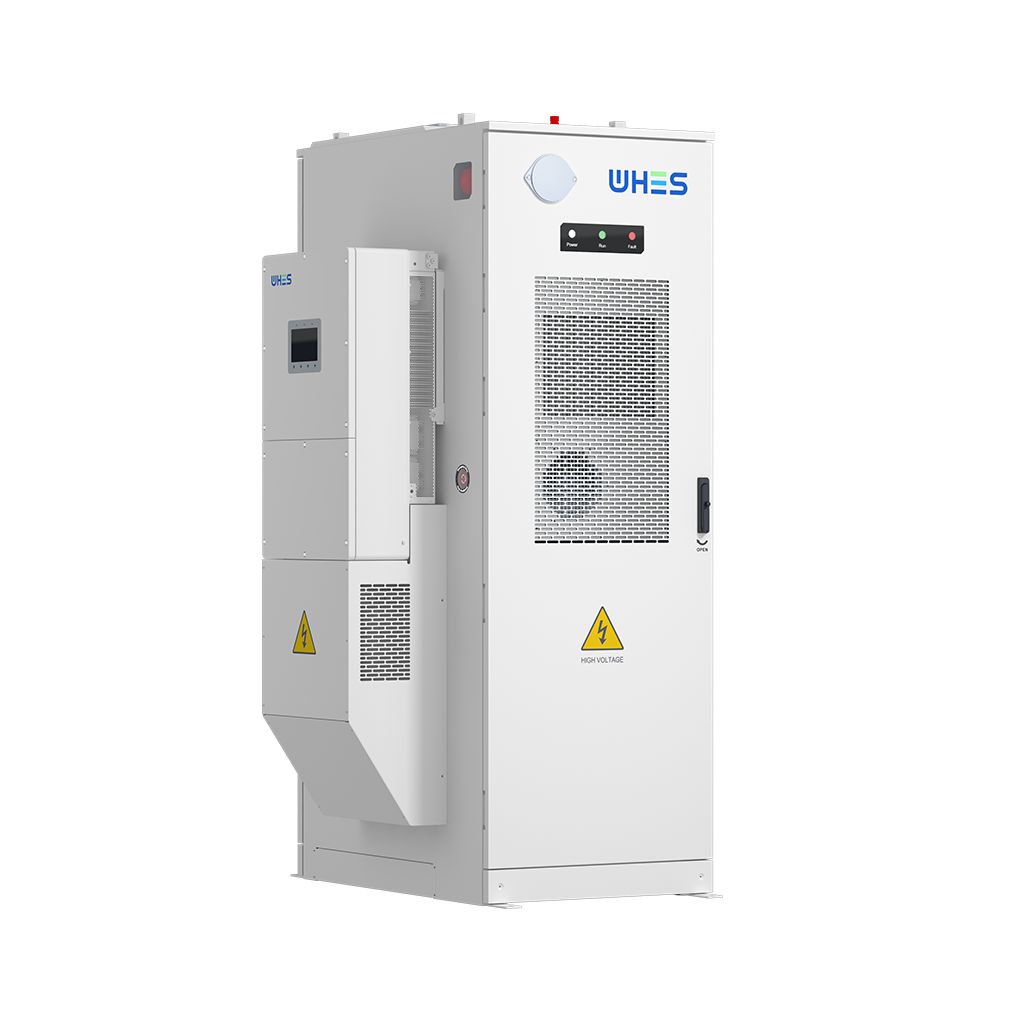
Vendor evaluation checklist
Use a concise checklist during vendor selection:
- Documented cycle life and degradation curve (with test reports)
- Clear warranty language tied to retained capacity and calendar life
- Integrated controls supporting islanding and peak shaving
- Proven installations in similar climate and regulatory contexts
- Transparent total cost modeling: CapEx, OpEx, replacement schedule
Picking the right strategy for your site
If your primary goal is cost savings in commercial or industrial settings, model demand charge reductions and choose systems with high round-trip efficiency and robust BMS controls. For resilience-first use cases — hospitals, emergency shelters, or remote campuses — prioritize systems designed for reliable islanding and longer cycle life, even at higher upfront cost. Hybrid strategies that phase capacity purchases let you lock in current technology while preserving optionality as prices continue to shift.
Advisory: three golden evaluation metrics
1) Lifetime cost per delivered kWh: include battery replacements, inverter swaps, and all OpEx. 2) Proven operational efficiency: verify round-trip efficiency and real-world cycle life through witness tests or third-party reports. 3) System-level resilience: confirm islanding capability, transfer time, and controls compatibility with existing generators or building management — these determine the real-world value of a microgrid.
When you balance those metrics against site-specific revenue streams (demand-charge arbitrage, time-of-use savings, and outage avoidance), the best choice becomes clear. For many buyers, that clarity points to vendors who combine measurable performance with turnkey delivery — and that’s exactly the commercial value WHES has focused on bringing to market in real deployments. —
WHES. – practical.
